
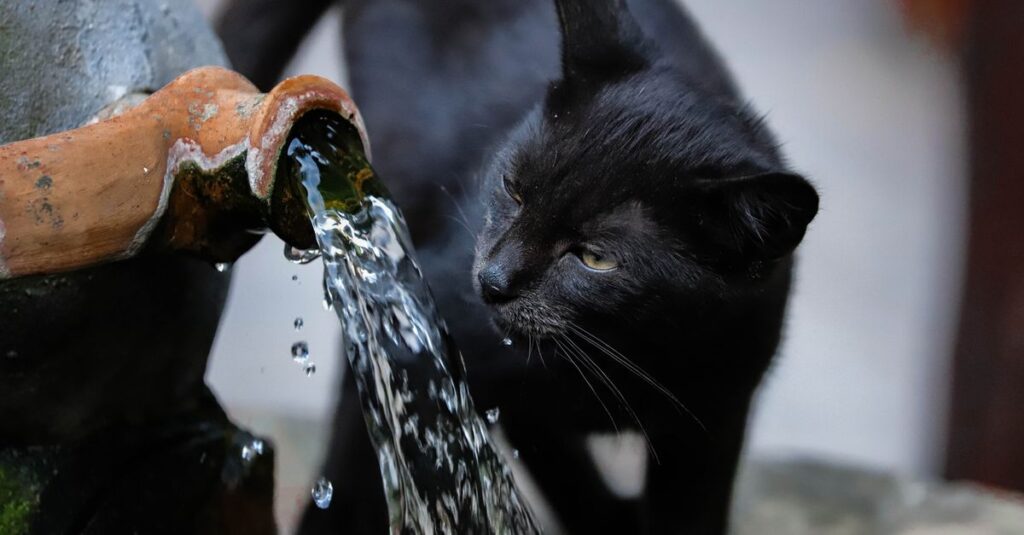
Some cats drink more readily from moving water, but a fountain is not a treatment and cannot replace veterinary advice. Use this guide to compare seven options and work through the practical buying questions: cleaning, replacement filters, power supply and everyday maintenance.
Quick Picks: Our Top Recommendations
Short on time? Here are our top-rated recommendations based on reliability, ease of maintenance, and real value.
PETLIBRO Stainless Steel Fountain
- Food-grade SUS 304 hygienic steel (prevents chin acne)
- Ultra-quiet 23dB pump with water-level window
- Comprehensive 4-stage carbon filtration
PETKIT Eversweet Solo SE
- Patented wireless pump (lifts out with zero cables)
- Dishwasher-safe stainless steel tray & body
- Zero-effort weekly cleaning routine
MISFANS Stainless Steel Fountain
- All-metal stainless construction at entry-level price
- Silent submersible motor & steady circulation
- Affordable replacement filter bundles
Quick comparison
| Fountain | Material | Standout | Best for |
|---|---|---|---|
| 1. PETLIBRO | Stainless | Water-level window | All-around |
| 2. PETKIT | Stainless | Dishwasher-safe | Easy cleaning |
| 3. Catit | Stainless | Known brand | Reliability |
| 4. SOVELIVEE | Stainless | Very quiet | Bedrooms |
| 5. LIPPUP | Stainless | Multi-stage filter | Cleanest water |
| 6. MISFANS | Stainless | Low price | Budget |
| 7. PETALPAW | Stainless | Cordless | Flexible placement |
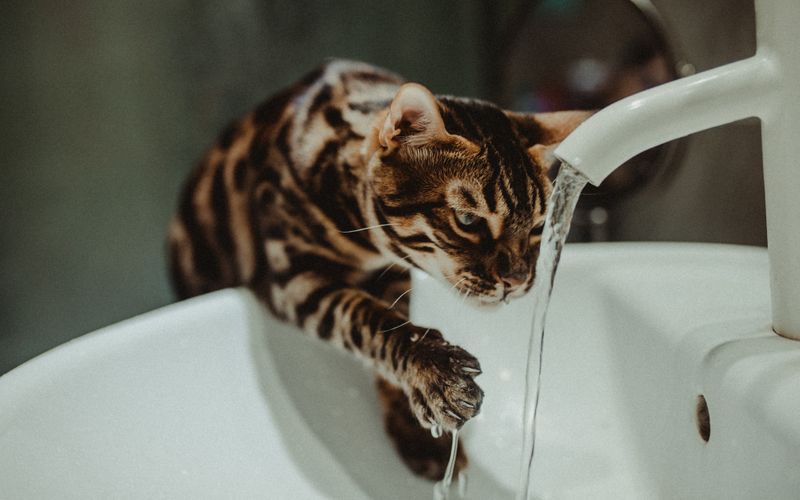
Which cat water fountain fits your situation?
Start with the job you need the fountain to do. Use this checklist alongside the model comparison, then confirm the details for the exact model number before ordering.
| Your priority | What to check | Question before buying |
|---|---|---|
| A quiet bedroom or home office | Noise information for the exact model and access to the pump for cleaning. | Is the noise claim a measured result or a marketing description? |
| Easy cleaning | Removal of the tray, tank, filter housing and pump; dishwasher instructions for each part. | Can I reach every part that touches water? |
| A small budget | The purchase price plus compatible filters and replacement parts. | What will six months of filters cost? |
| A spot away from an outlet | Battery operation and the difference between sensor-triggered and continuous flow. | Does the flow mode I want work when unplugged? |
| More than one cat | Tank capacity, usable drinking space and how easy it is to check the water level. | Can I monitor and refill it conveniently every day? |
| A first fountain | Setup instructions, return terms and replacement-filter availability. | Can I keep a clean bowl available while my cat tries it? |
Model details matter: PETLIBRO’s instructions for the Dockstream Battery-Operated fountain (PLWF115), for example, distinguish radar-triggered battery use from continuous flow on external power. Its FAQ also says the fountain parts are not dishwasher-safe. These details apply to PLWF115, not every fountain from the brand. Check the manufacturer’s specifications and FAQ.
The 7 best cat water fountains
1. PETLIBRO stainless steel fountain: best overall [1]
This is the one I would hand a friend who has never owned a fountain. Its stainless build runs quietly, comes apart easily for cleaning, and has a small window that helps you monitor the water level. Downside: filters are a recurring cost, and the pump wants a quick clean every couple of weeks to stay silent.
— based on a verified Amazon buyer’s review
2. PETKIT dishwasher-safe fountain: easiest to clean [2]
Nobody warns you that you will be scrubbing this thing every week. PETKIT gets around it: the stainless parts go in the dishwasher, so cleaning takes seconds. You pay more for that convenience, but if your time is tight it earns the premium.
3. Catit stainless fountain: the safe brand pick [3]
Catit has been making pet fountains for years, so parts and replacement filters are easy to track down. It skips the smart features, but if you want a name with a track record and no surprises, this is it.
4. SOVELIVEE fountain: the quietest [4]
If the fountain lives near your bed or desk, noise is the thing that will drive you nuts. SOVELIVEE leans hard on a near-silent pump, quiet enough that you forget it is on. The reservoir is on the smaller side.
5. LIPPUP fountain: best filtration [5]
Hard water or a cat that sheds a lot? Then filtration is what matters most. LIPPUP runs a multi-stage filter that catches hair and grit, so the water stays fresher between changes. More filter parts also means a bit more to maintain.
6. MISFANS fountain: best value [6]
You do not need to spend a lot to get a cat drinking more. MISFANS covers the basics, stainless and quiet with a filter, at a friendlier price. A solid first fountain that does not feel cheap.
7. PETALPAW cordless fountain: most flexible [7]
No outlet where your cat likes to drink? PETALPAW runs on a battery, so you can put it where the cat actually wants it instead of where the cord reaches. You do have to remember to recharge it.
Do not forget the filters
Whatever fountain you pick, the filter helps catch debris, but it does not replace regular cleaning. Many manufacturers recommend replacing filters every 2 to 4 weeks; check the model instructions and keep a spare pack in the cabinet.
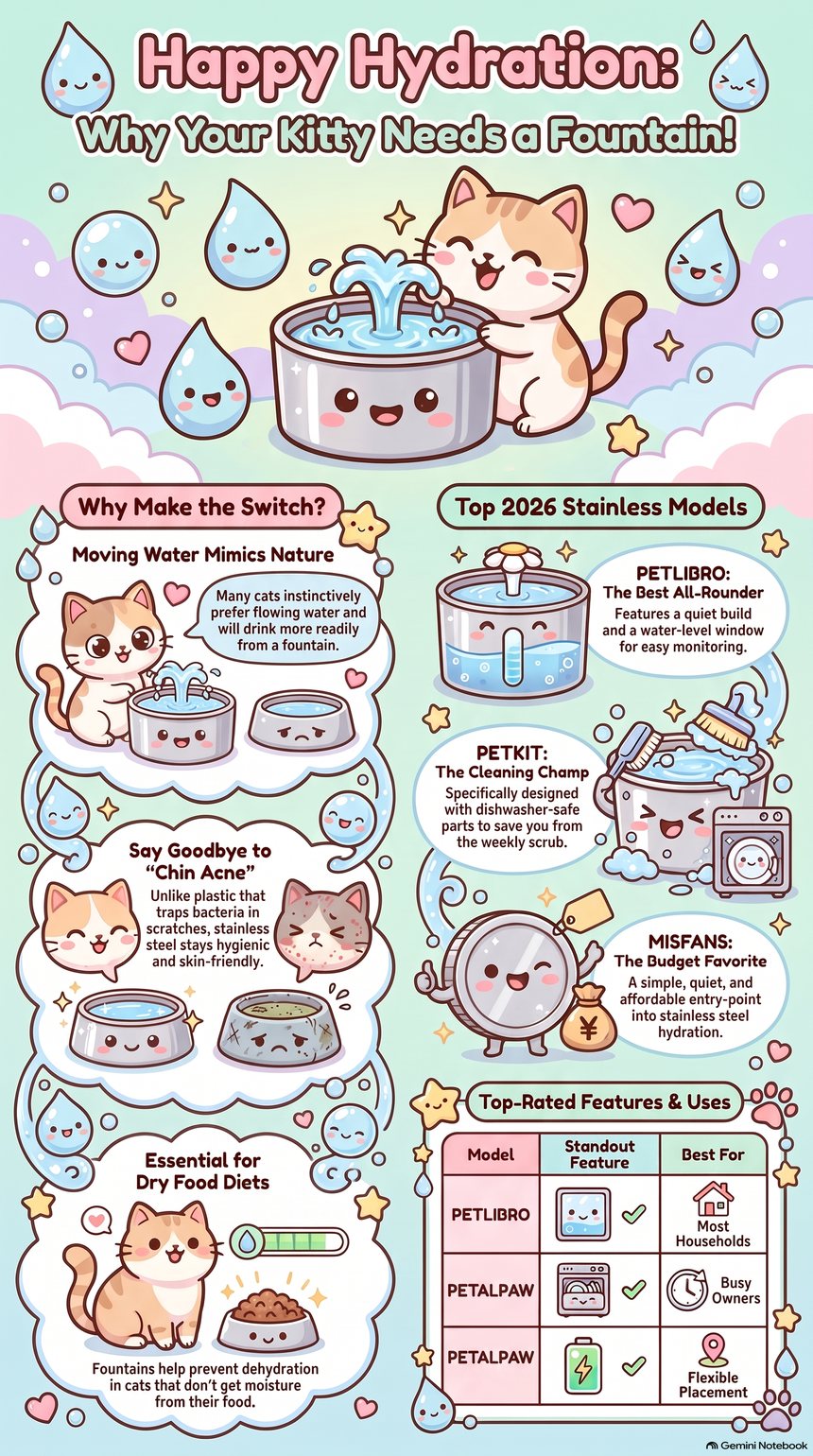
How to choose
Four things actually matter here:
- Material. Stainless and ceramic are easy to clean; plastic can also work when it is intact and cleaned regularly.
- Pump noise. Look for “ultra quiet”; some cats may avoid a loud fountain.
- Filter availability. Check that replacements are easy to find before you buy.
- Capacity. Go 2L or more if you travel or have several cats.
Related guides
- How to Get Your Cat to Drink More Water: The Complete Guide
- PETLIBRO Cat Water Fountain Review: Is It Worth It?
- Cat Water Fountain vs Bowl: Which Is Better?
- How Often Should You Change a Cat Fountain Filter?
Other cat essentials
Sources
Each link below points to the same Amazon listing cited for that pick above.
- PETLIBRO stainless steel fountain: best overall
- PETKIT dishwasher-safe fountain: easiest to clean
- Catit stainless fountain: the safe brand pick
- SOVELIVEE fountain: the quietest
- LIPPUP fountain: best filtration
- MISFANS fountain: best value
- PETALPAW cordless fountain: most flexible
FAQ
Are cat water fountains worth it?
For some cats, yes—especially if they prefer moving water or you want to make fresh water more convenient. It is a convenience tool, not a treatment; a cat drinking much more or less than usual should be checked by a veterinarian.
Stainless or plastic?
Stainless steel is durable and easy to clean; plastic can also work when it is kept in good condition and cleaned regularly. Choose based on cleaning, replacement parts and your cat’s preference.
How often should I change the filter?
Every 2 to 4 weeks on average, sooner with multiple cats or hard water.
How much does a cat fountain cost to maintain?
Compare the purchase price and recurring supplies separately. For each model, note the price of a compatible filter pack, the number of complete changes it provides and the replacement interval in that model’s instructions. Include any separately sold foam or pump filters.
- Cost per change: filter-pack price divided by the number of complete filter changes in the pack.
- Six-month estimate: cost per change multiplied by the number of changes over approximately 26 weeks.
- Other costs: add delivery, any separate consumables and electricity if you want a fuller ownership estimate.
Worked example with hypothetical prices
A hypothetical $18 pack that provides six complete changes costs $3 per change. With a two-week replacement interval, budget for about 13 changes over 26 weeks: $39 in filter usage. Buying only six-change packs would require three packs at $54, leaving five changes for later. An included starter filter can reduce the initial purchase needed.
These figures demonstrate the calculation; they are not current prices or a quote for any fountain in this guide. They exclude delivery, tax and electricity.
For a real model-specific interval, PETLIBRO currently specifies replacing the filter and foam filter every two weeks for PLWF115. Follow the instructions for your own model rather than applying that schedule to every fountain. See our guide to replacement intervals and maintenance.
Still deciding whether to buy a fountain at all? Our fountain versus bowl guide walks through that decision first.
The verdict
For most owners, the PETLIBRO (pick 1) is the right call: quiet, hygienic, and low fuss. Want the easiest cleanup? Go PETKIT. On a budget? MISFANS covers the basics without feeling cheap. Whatever you pick, grab a pack of filters so your cat keeps coming back to it.
How to use this editorial comparison
This page is a buying guide, not a report of hands-on testing of all seven fountains. It does not provide independently measured noise levels, cleaning times, pump lifespan or water-quality results. Treat the product descriptions as a starting point and confirm the exact model, manual, current price and replacement parts with the manufacturer or seller.
The buying checklist and filter-cost example added on September 15, 2026 focus on questions you can verify before purchase. The model-specific example cites PETLIBRO’s PLWF115 documentation; it does not verify the specifications of the other products in the list. Descriptions such as “quietest” in the existing roundup are editorial labels, not the result of a controlled noise comparison.
For our broader standards, read how we choose products. If a listing or specification has changed, use our corrections policy to let us know.
What to check before buying any fountain
Material. Plastic is cheaper and lighter, but scratches can trap residue and odors. Ceramic and stainless usually cost more and are easy to clean. If the budget allows, either can be a practical upgrade.
Noise. Look for the manufacturer’s noise rating, but remember that real-world noise also depends on water level, placement and pump maintenance. A visible water window can make low-water noise easier to prevent.
Filters. Before you buy, check the price and availability of that model’s replacement filters. A fountain with rare filters becomes a fountain without filters in two months, and then a plain bowl is honestly better.
Capacity. Up to 2 cats, 60 to 70 ounces works. More cats or a warm home, aim for 85 ounces or more, or you become a slave to refilling.
Disassembly. Fewer parts and corners means you will actually clean it weekly. A fountain that is hard to clean ends up dirty, and a dirty fountain drives the cat away.
Common mistakes (that make a fountain “not work”)
Washing only the basin and never opening the pump, which is where the slime lives. Letting the level drop until the pump sucks air, which makes noise and burns the motor. Placing the fountain right next to the food, when many cats prefer to drink away from where they eat. And giving up in week one: cats distrust new objects, give it at least two weeks with the old bowl still available.
Who can skip the fountain
Honestly: if your cat eats plenty of wet food, drinks well from a bowl, and you change the water twice a day, a fountain is comfort, not necessity. It becomes a priority when your cat drinks little, eats only dry food, is a senior, or has had a urinary issue before.