
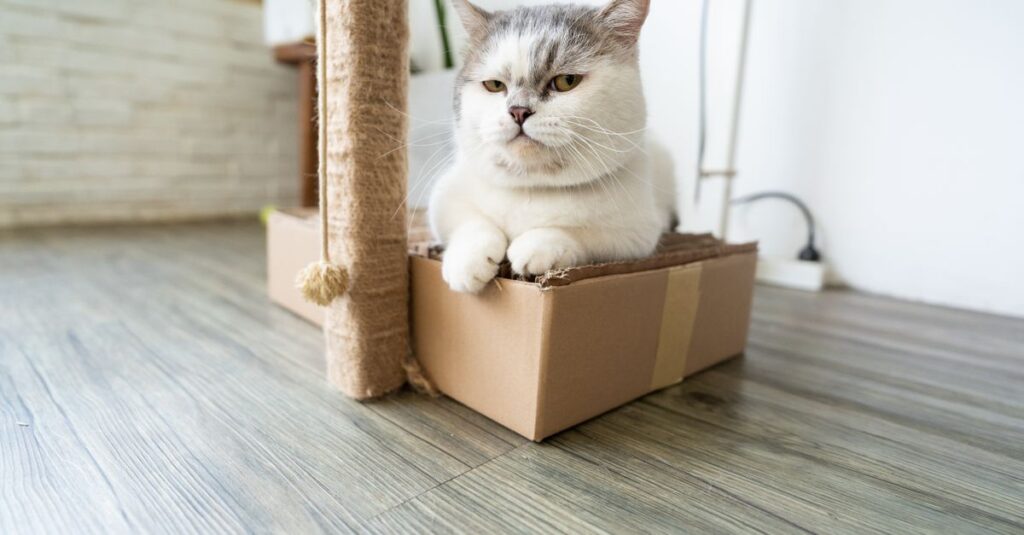
A good cat tree solves two problems at once: it gives your cat somewhere to scratch and somewhere to climb, both things every cat needs. But the market is full of pretty, useless towers that wobble or sit too low. Here is what to look for so you pick one the cat actually uses.
What makes a good tree
- Heavy, stable base. This is the most important part. A tower that wobbles when the cat jumps scares it off and becomes decor. A wide, firm base is non-negotiable.
- Sisal posts. Sisal is the texture cats love to scratch. Avoid carpet-wrapped posts, which appeal less.
- Real height. Cats love being up high to survey everything. Taller with more levels is better, within the space you have.
- A platform on top. A high spot to sleep and watch is what makes a cat adopt the tower as its own territory.
- Hideaways and hammocks, if your cat likes to hide. Not every cat uses them, so do not overpay just for that.
Size and space
Before buying, measure the corner where the tree will go. Next to a window is unbeatable, because it pairs height with a view of the street. A big cat or more than one cat calls for reinforced platforms and an even more stable base.
Common mistakes
The biggest mistake is buying by the photo and ignoring stability. The second is picking one too short, which does not let the cat stretch or feel like it is at the top of its territory. A firm, tall, sisal tree gets used every day. A pretty, wobbly one becomes a coat rack.
The short version
Prioritize a stable base, sisal, and height, in that order. The rest is a bonus. See our pick of the best cat trees. And if the goal is saving the couch, start with how to stop your cat from scratching the couch.
What holds up over years, not just out of the box
A cat tree gets daily impact, so hardware quality matters more than it looks like it should in a showroom. Check how the platforms and posts attach, bolted and screwed construction holds up far longer than pieces that rely mostly on friction or glue. Sisal wrapping on the scratching posts wears out with heavy use over time, so posts that are replaceable, or wrapped in a way you could re-wrap yourself, extend the life of the whole piece well past the point a fixed, non-replaceable post would need to be thrown out. Every few months, it is worth going around the tree and re-tightening any connecting bolts, since normal jumping and scratching gradually loosens them, and a loose tree is a wobbly, unsafe tree.
Matching the tree to more than one cat’s personality
In a multi-cat household, a single tree can become a source of low-level tension if there is only one good top perch, since that spot usually goes to the most confident cat and the others learn to avoid the tree altogether. Trees with multiple platforms at different heights, rather than one tower with a single peak, give more than one cat a legitimate high spot at the same time, which reduces the odds of one cat monopolizing it. A shy or newly adopted cat also tends to prefer a tree with some kind of enclosed hideaway over a fully open design, since the ability to see out without being seen matters more to a nervous cat than height alone.
Frequently asked questions
Is a cat tree worth it in a small apartment?
Even more so. In a small space, going vertical is the only way to expand your cat’s territory. A tall, narrow tower uses less than one square meter of floor.
Does a senior cat need a different tree?
Yes: lower platforms, in-between steps, and more padded beds. Older cats still love height, they just cannot jump as far to get there.
How do I get my cat to use the new tree?
Placement is everything: near a window or where the family hangs out. Rub catnip on the posts and play around it with a wand toy. Do not force them onto it.