
You bought the fountain, but nobody explained the part that matters most: the filter needs upkeep. Skip it and the water ends up worse than a plain bowl. Here is the right schedule and the mistakes almost everyone makes.
How often to change the filter
The general rule is every 2 to 4 weeks. Shorten it to 2 weeks if you have several cats, a long-haired cat, or hard water where you live.
The 5 most common mistakes
- Never cleaning the pump. Gunk and slime build up, the fountain gets loud, and one day it quits. Clean the pump every time you change the filter.
- Letting the water run too low. A dry-running pump burns out. Keep it topped up.
- Washing a new filter with soap. Do not. Just rinse it under running water.
- Skipping the descale. Every month or two, soak the parts in diluted vinegar to clear mineral scale.
- Buying the wrong replacement filter. Check the model. One reason we pick carefully in our best fountains list is easy filter availability.
Why the filter matters more than most owners think
A carbon filter is not just there to catch stray hair. It absorbs some of the odors and off-tastes that build up as water sits and recirculates, including residue from saliva, food particles, and whatever is in your tap water. A cat’s sense of smell and taste is far more sensitive than ours, so a filter that is “probably still fine” to you can already taste stale enough for a cat to start avoiding the fountain altogether. That is the quiet failure mode of fountain ownership: the water looks clear, the fountain still runs, but your cat has quietly gone back to drinking less because the water does not taste right anymore. If a fountain that used to work suddenly gets ignored, an overdue filter is one of the first things worth checking, right alongside water level and pump cleanliness.
Signs it is time to change the filter early
- Visible discoloration of the filter foam or carbon, especially a grayish or brownish tint.
- A musty or plasticky smell coming from the water itself.
- Slower flow from the spout, which usually means the filter is clogged with hair and debris.
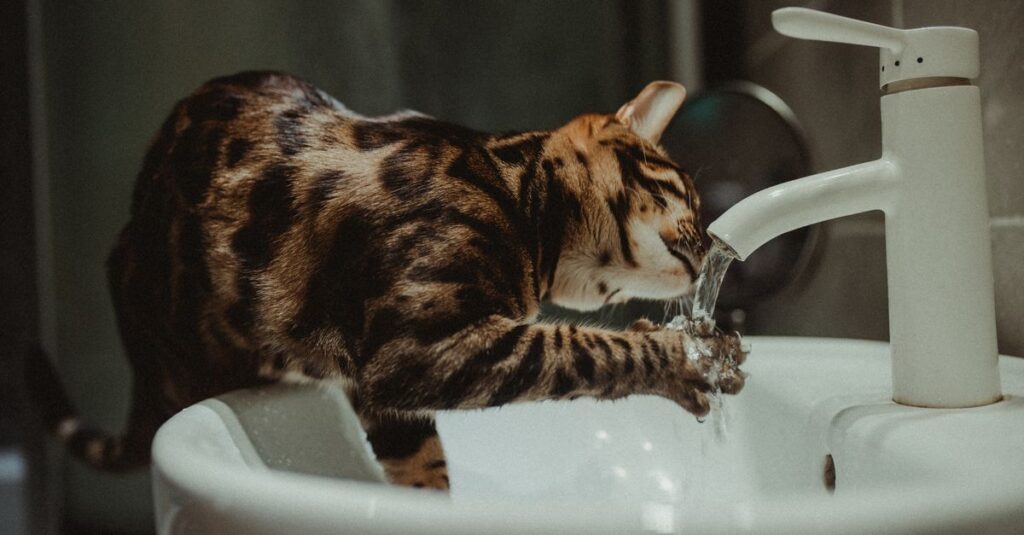
- Your cat suddenly drinking less or going back to the bathroom sink or tap.
Not all filter materials behave the same way
Most cat fountains use an activated carbon filter, sometimes combined with a foam pre-filter that catches hair and larger debris before the water even reaches the carbon. The foam layer is the part that clogs fastest and is worth checking on its own between full filter changes, since a hair-clogged foam pre-filter can slow water flow even while the carbon underneath is still doing its job. Some ceramic fountains use a stone or sponge filter instead of carbon, which tends to need less frequent replacement but does less to neutralize odor and taste. Whichever type you have, the underlying rule is the same: a filter is a consumable, not a one-time purchase, and budgeting for regular replacements from day one avoids the surprise of an “expensive” fountain a few months in.
FAQ
Can I run the fountain without a filter?
Not a good idea. The filter catches hair and debris and improves the taste, which is what keeps your cat coming back.
Can the pump stay on 24/7?
Yes, it is built for it and uses very little power. Just keep the water level up.
Is it normal for a new filter to release tiny black specks?
Yes, a small amount of loose carbon dust from a brand-new filter is normal and harmless. Rinsing the filter under running water before installing it cuts this down a lot, and it should stop entirely after the first day or two of use.
Still choosing a model? Start with our hydration guide or read our PETLIBRO review.