
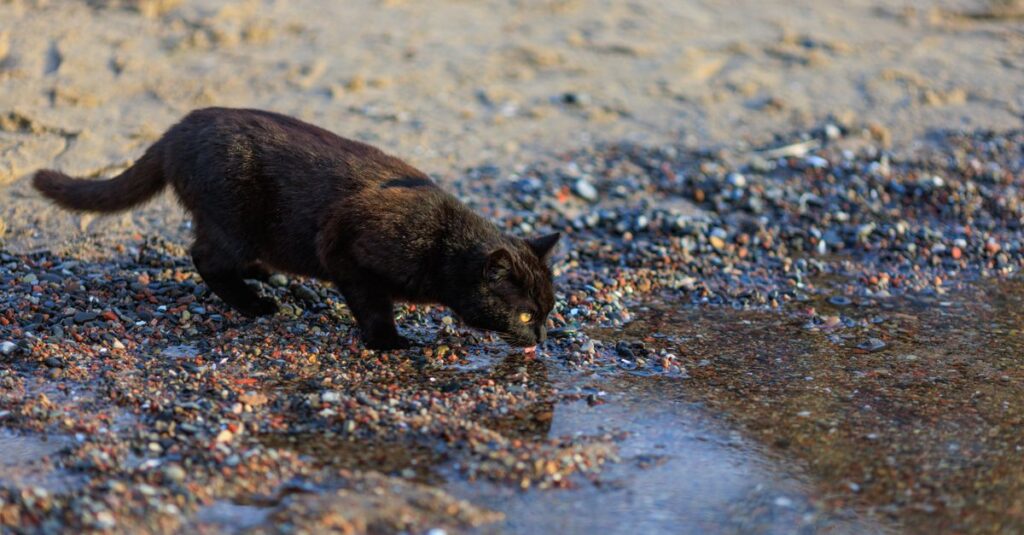
Is a cat water fountain worth the money, or does a plain bowl do the job? The short answer: it depends on your cat. But in most homes, the fountain wins, and the reason has less to do with the product and more to do with your cat’s biology. Here is the honest comparison so you can decide without wasting money.
Why this choice matters more than it looks
Cats descend from desert animals and have a naturally low thirst drive. In the wild, they got almost all their water from prey. In your home, eating dry kibble, that math does not add up, and a cat’s body does not signal thirst the way ours does. The result shows up years later, in the kidneys and bladder, in the vet bills nobody wants to pay. So the real question is not which container looks nicer. It is which one gets your cat to actually drink more.
Quick comparison
| Criteria | Water fountain | Plain bowl |
|---|---|---|
| Encourages drinking | Moving water attracts | Still water attracts less |
| Freshness | Circulates and filters | Stagnates fast |
| Maintenance | Clean pump, change filter | Just wash it |
| Upfront cost | Higher | Very low |
| Power | Uses a little (pump) | Zero |
What moving water actually changes
Instinct. In nature, still water is suspicious water, and running water is safe water. Many cats ignore the bowl all day and come running when you open the tap for exactly this reason. A fountain mimics that movement: it draws attention, oxygenates the water, and keeps the temperature more pleasant. In multi-cat homes it also cuts down on standoffs, because the water renews itself instead of sitting there smelling like the other cat.
When a plain bowl is enough
Not every cat needs a fountain, and it is only fair to say so. If yours already drinks well, eats plenty of wet food (which is mostly water), and you change the water at least twice a day, a wide ceramic or stainless bowl does the job. Skip plastic, because scratches in plastic harbor bacteria and cause that slimy film. And wash it with soap daily, do not just top it up.
When the fountain pays off
If your cat drinks little, prefers the tap, eats only dry food, is a senior, or you have already had a urinary scare, the fountain earns every cent. It is the difference between treating and preventing. The full picture is in our hydration guide, but the summary is simple: every extra milliliter of water today is one less urinary problem tomorrow.
PETLIBRO Stainless Steel Cat Fountain
If you go the fountain route, this is our overall recommendation.
Verdict
For most cats, a fountain increases water intake and helps prevent that expensive vet bill down the road. The bowl works when your cat already drinks well and you are disciplined about changing the water. If in doubt, watch for a week: if the bowl level barely drops, your cat is voting for the fountain. Pick yours in our list of the best cat fountains.
The real cost comparison, beyond the sticker price
A bowl looks cheaper because the only cost is the bowl itself. A fountain adds electricity, which is genuinely negligible, and filters, which are the real ongoing expense. Over a year that adds up to more than a bowl ever costs. The way to think about it honestly is against the alternative outcome: a urinary blockage, a bladder infection, or a bout of kidney disease brings a vet bill and a stressed cat that dwarfs years of filters. That is not a scare tactic, it is just how the math works out when hydration is the preventive layer rather than the fix. If your cat is already a strong drinker from a bowl, that math never has to come up, and the bowl remains the right, cheaper choice.
Common mistakes when switching between the two
A cat that has always used a bowl will not always take to a fountain overnight. The most common misstep is putting the fountain out, waiting a day, and giving up when it is ignored. Keep the old bowl running alongside the new fountain for a week or two rather than swapping cold turkey. Placement matters too: a fountain tucked in a noisy laundry room or right next to the litter box gets avoided for the same instinctive reasons a bowl would be. And on the bowl side, the most common mistake is treating “full” as the same thing as “fresh” — a bowl that is topped up but never emptied and rewashed still grows the same biofilm a neglected fountain basin does.
Frequently asked questions
Can a cat be fine with just a bowl?
Yes, as long as it drinks enough and the water is changed at least twice a day. If your cat drinks little or eats only dry food, a fountain helps close the hydration gap.
Should the fountain run all day?
Yes, the point is for the water to be moving whenever your cat feels like drinking. The pump draws very little power, pennies a month on your electric bill.
Where should the water go?
Away from the litter box and slightly apart from the food. Cats avoid drinking where they do their business, and many prefer water separated from the food bowl.
Can I offer both a fountain and a bowl at the same time?
Yes, and for cats that are hesitant about change, that is often the smoothest transition. Some cats even end up using both, drinking from the fountain during the day and a backup bowl overnight or in another room.