
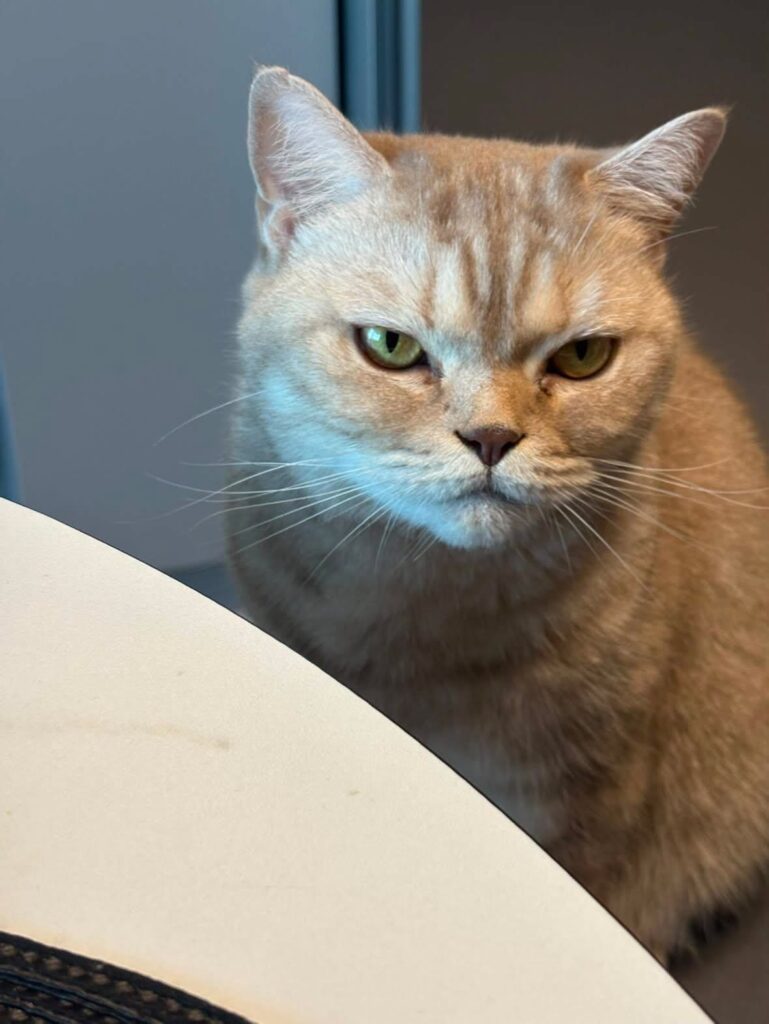
The cat walks up to the bowl, sniffs, looks at you, and walks away without eating. The food is the same as always. He’s not sick, he’s not being difficult, and he hasn’t gone off the kibble. Most of the time, the problem isn’t the food — it’s the bowl.
The cat who only eats from a clean dish
Tasya is six years old and has one rule: she won’t touch food if the dish hasn’t been washed that day. Not even one day’s delay is acceptable to her.
Her owner told me this laughing, like she was describing a quirk. She isn’t. And she also mentioned, almost as an aside, the detail that ties it all together: Tasya only eats from a ceramic bowl.
The two things have the same explanation.
Why a bowl gets dirty faster than it looks
Fat from kibble and wet food sits on the bowl’s surface. In contact with air, it oxidises — turns rancid — within a few hours. You won’t notice, because human smell is blunt compared to a cat’s.
To a cat, the smell of old grease sits right on top of the smell of fresh food. It’s like eating off a plate wiped with a sour cloth: the food might be fine, but you can’t get past the first whiff.
Add saliva and leftover residue on the sides, and a bowl that’s “just a little dirty” is a bowl with a strong smell.
Plastic is the worst material, and the reason is physical
Plastic scratches. There’s no avoiding it: claws, a rough tongue and a scouring sponge all mark the surface over time, and every scratch is a microscopic groove where grease and bacteria settle in. Washing doesn’t reach the bottom of the groove.
That’s why plastic is the material most linked to feline chin acne — those little black dots under the chin that a lot of people mistake for dirt. The chin brushes the bowl’s rim with every bite.
Plastic also holds smell permanently. A bowl that’s ever held wet food is never fully neutral again.
What to use, in order
- Glazed ceramic. Non-porous, doesn’t hold smell, heavy enough not to slide while the cat eats. It’s Tasya’s choice, and it’s the top recommendation.
- Stainless steel. Equally hygienic and practically indestructible. One catch: it’s light and can slide around, and some cats dislike the sound of a tag clinking against it.
- Glass. Great material, breaks easily.
- Plastic. Only if it’s the only option available, and replace it often.
One ceramic detail almost nobody checks: if the glaze is chipped or cracked, that spot turns porous and starts behaving like plastic. A chipped bowl is a bowl to retire.
Shape matters more for fast eaters
A deep, narrow bowl forces the cat to push their face in, and the whiskers keep brushing the sides. There’s an ongoing debate about how much this actually bothers cats — the term going around is “whisker fatigue,” and the scientific evidence is still thin, so I’m treating it as a hypothesis, not a fact.
What’s observable without controversy: a shallow, wide bowl is easier to eat from and easier to wash. If your cat scoops food out with a paw and eats off the floor, trying a shallow bowl usually fixes it.
Where to put it
- Away from the litter box. Obvious, and still the most common mistake in a small apartment.
- Away from the wall, so the cat can eat without having their back to the room.
- Water separate from food. Cats tend to avoid drinking near the smell of food — it’s one of the reasons cats drink too little.
The routine that fixes it
Wash the food bowl every day, with hot water and mild dish soap, rinsed well. Strongly scented detergent leaves its own smell residue and creates the same problem from the other direction.
Having two sets of bowls helps more than it sounds: while one is in the sink, the other is in use, and you never fall into “I’ll wash it tomorrow.”
Frequently asked questions
My cat stopped eating. Could it be the bowl?
It could, especially if they walk up, sniff, and leave — rather than ignoring the bowl from a distance. Try serving the same food in a clean ceramic dish. If they eat, it was the bowl. If they still refuse, it’s a vet visit.
What’s the best bowl material for cats?
Glazed ceramic and stainless steel. Both are non-porous, don’t hold smell and don’t scratch easily. Ceramic has the edge for being heavier and less prone to sliding.
Is plastic bad for cats?
It’s not toxic, but it scratches with use, and the scratches trap grease and bacteria. It’s the material most linked to feline chin acne.
Do I really need to wash the bowl every day?
Yes, the food one. Fat from kibble oxidises within hours, and the resulting smell is obvious to a cat even when it’s imperceptible to you.
Is “whisker fatigue” real?
It’s a popular hypothesis without solid scientific evidence so far. What can be said with confidence is that a shallow, wide bowl is more comfortable and more hygienic — if it also helps with the whiskers, that’s a bonus.