
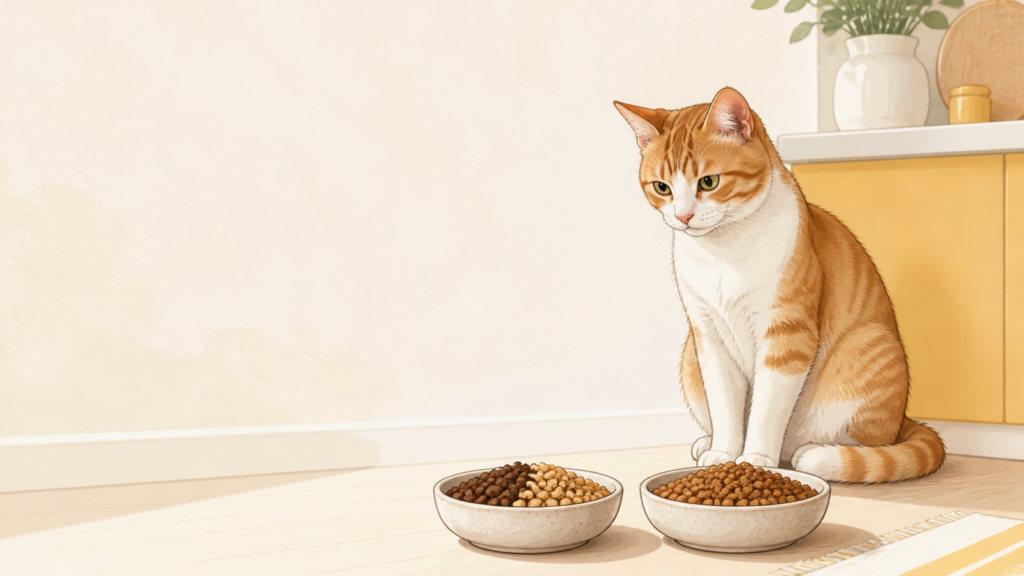
Changing your cat’s food is one of the most common, and most commonly rushed, tasks in cat care. A sudden swap can trigger vomiting, diarrhea, or a cat that simply refuses to eat. The fix is straightforward: transition slowly, watch the signs, and let your cat’s gut catch up to the new recipe.
Quick answer: Most cats do best with a gradual 7 to 10 day food transition. Slow down if appetite, stool quality, or comfort changes.
This guide covers why cats are sensitive to diet changes, when a switch is actually warranted, and a step-by-step transition schedule you can adapt to your own cat.
Fast Facts
- A gradual transition of 7 to 10 days is the standard recommendation from most veterinarians.
- Cats are notorious “neophobes”: many are suspicious of new food simply because it smells or feels unfamiliar.
- Sudden changes are a frequent cause of acute digestive upset (vomiting or soft stool).
- Mix old and new food in stages; don’t just sprinkle the new food on top of the old.
- If diarrhea lasts more than 48 hours or your cat stops eating, contact your vet.
- An automatic feeder can help keep portions and meal timing consistent during a transition, or see our 7 best automatic cat feeders comparison.
Why Cats React Badly to Sudden Changes
A cat’s digestive system is relatively short and tuned to a consistent diet. The gut houses a community of bacteria (the microbiome) that learns to process whatever your cat eats regularly. Swap the food overnight and that bacterial community has to adapt on the fly, which is why loose stool and vomiting show up so often after an abrupt change. On top of the biology, many cats are neophobic about food: they will side-eye a new kibble or pate just because it looks, smells, or feels different, even if the old bag is empty.
That combination of a sensitive gut and a suspicious eater is exactly why a slow handoff works better than a hard cutover.
When You Actually Need to Switch
Not every switch is necessary. Cats are creatures of habit, and a food they are doing well on usually does not need upgrading. Common reasons a change is worth it:
- Life stage: kittens, adults, and seniors have different energy and nutrient needs.
- Weight: a vet-recommended calorie change for an overweight or underweight cat.
- Health: a veterinary-prescribed diet for a specific medical condition.
- Palatability: your cat has genuinely gone off the old food and refuses to eat it.
If you are debating wet versus dry, or how much your cat should actually be eating, those are worth reading first because they shape what you switch to, not just how. See our breakdown of wet vs. dry cat food and our guide on how much to feed a cat per day.
The Step-by-Step Transition Schedule
The goal is to move from 100% old food to 100% new food over roughly a week to ten days, shifting the ratio in small steps. If your cat has a sensitive stomach, stretch it to two weeks.
Days 1 to 2: 75% old food, 25% new food.
Days 3 to 4: 50% old food, 50% new food.
Days 5 to 6: 25% old food, 75% new food.
Days 7 to 10: 100% new food.
Mix the two thoroughly in the same bowl rather than placing them side by side. Side-by-side feeding lets a picky cat eat only the old food and defeats the purpose. Watch the litter box and the appetite each day. If you see soft stool or reduced interest, hold at the current ratio for an extra day or two before advancing.
Tips to Make It Stick
- Keep the texture consistent. Moving from pate to chunks, or dry to wet, is a bigger leap than changing the flavor. If you must change texture too, go even slower.
- Warm it slightly. A few seconds in the microwave (then stir and test the temperature) releases aroma and tempts reluctant eaters.
- Hold the routine. Same times, same bowl, same quiet spot. An automatic feeder removes the variable of late meals, which helps keep digestion steady during a transition.
- Don’t rush a refuser. If your cat won’t touch the new mix, drop back a step rather than starving them into compliance. A cat that stops eating for even 24 to 48 hours is at risk of serious liver trouble (hepatic lipidosis), so call your vet if intake drops.
FAQ
How long should a cat food transition take?
About 7 to 10 days for most healthy adult cats, and up to two weeks for a senior cat or one with a known sensitive stomach. Slowing down is always safer than rushing.
My cat won’t eat the new food at all. What now?
Drop back to the previous ratio for a few days, then advance in smaller increments (such as 10% changes). Try warming wet food slightly or choosing a formula with a similar texture. If your cat refuses food entirely for more than 24 hours, or shows lethargy, contact your vet and review our piece on cats that eat too fast and throw up.
Can I mix wet and dry food during the switch?
Yes, as long as you count both toward the total daily calorie portion. Keep the old-to-new ratio consistent across meals, and remember that wet food spoils at room temperature, so do not leave a mixed bowl out for more than 30 to 45 minutes.
This article is general feeding guidance, not a substitute for veterinary advice. For diet changes tied to a health condition, follow your vet’s specific plan.