
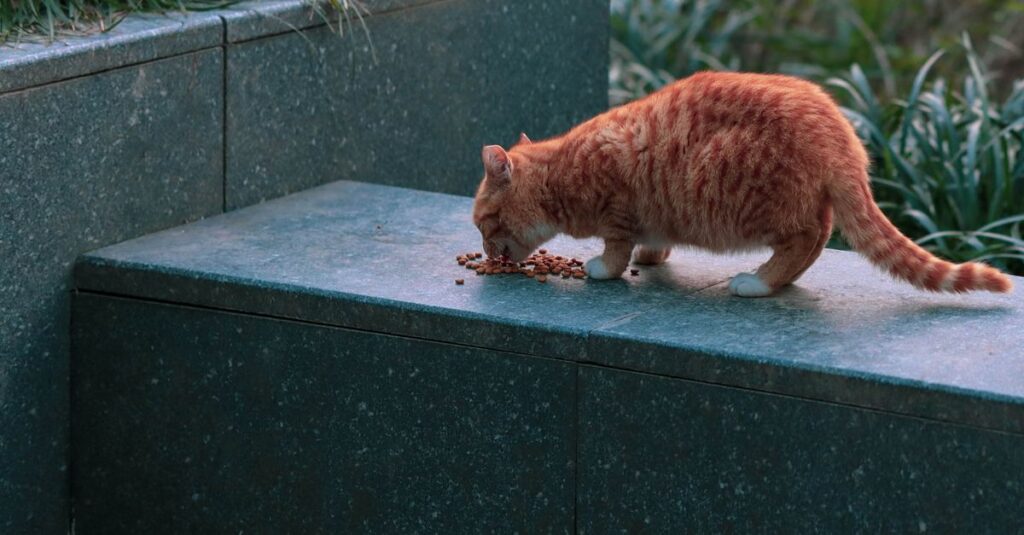
In the clinical landscape of feline health, we often prioritize the nutritional profile of the diet while overlooking the delivery mechanism. As veterinary technology specialists and behaviorists, we recognize that “how” a cat eats is a primary determinant of gastrointestinal and emotional stability. The ubiquitous “scarf and barf” phenomenon—rapid ingestion followed by immediate regurgitation—is not merely a nuisance for owners; it is a symptom of a feeding architecture that contradicts feline biology. Transitioning to slow and puzzle feeders is a foundational intervention for modern indoor cats.
Fast-Facts: The Science of Slow Feeding
| Feature | Standard Bowls | Slow/Puzzle Feeders |
|---|---|---|
| Primary Mechanism | Open, unobstructed access to food. | Physical barriers (ridges, ripples, labyrinths). |
| Health Impacts | High risk of aerophagia, bloating, and vomiting. | Paced digestion and physiological satiety. |
| Mental Impact | Low stimulation; contributes to “neophobia.” | High enrichment; mimics natural foraging. |
| Key Risks | Whisker fatigue and chronic overeating. | Initial frustration; requires 7-day transition. |
Pro-Tip: To prevent whisker fatigue—a state of sensory overload where sensitive receptors are overstimulated by bowl walls—ensure the feeder is at least 1.5 times the width of your cat’s head. Given that adult cats possess a whisker span of 15–20 cm, a narrow bowl is a significant source of mealtime stress.
Introduction: From African Wildcats to Living Room Bowls
The domestic cat remains biologically tethered to its ancestor, the African wildcat. In a natural state, felines are obligate hunters that engage in approximately 12 successful hunting expeditions daily. Their survival hinges on the “hunting cycle”: stalk, pounce, play, and kill.
When we provide food in a static bowl, we bypass this cognitive and physical loop. This circumvention leads to frustration and “neophobia”—a documented wariness toward environmental changes and new objects. Slow feeders serve as a “hunt simulator,” transforming mealtime from a passive event into an active achievement that satisfies deep-seated predatory instincts.
The Mechanics of the Challenge: How Slow Feeders Work
Slow feeders utilize textured design elements, such as ridges and ripple patterns, to create a navigated eating experience. These barriers are engineered to decrease the “bite rate,” preventing the cat from “vacuuming” their kibble.
The physiological benefit is profound. Rapid eating often leads to aerophagia, the involuntary gulping of air. By forcing a slower pace, these feeders prevent the stomach from expanding too rapidly with a mixture of air and unchewed food. Furthermore, the transition to “active hunting” triggers the release of endorphins. These feel-good hormones are naturally released during the final stages of the hunting cycle, leading to a state of post-prandial relaxation that standard bowls cannot provide.
The Health Transformation: Four Primary Benefits
- Slowing Eating & Reducing Vomiting: The textured surfaces minimize the “scarf and barf” reflex by disrupting the rapid intake of food and air. This mechanical pacing significantly reduces the risk of regurgitation and associated gastric bloating.
- Weight Management & Satiety: Biological research indicates a distinct delay in satiety cues reaching the feline brain. By slowing ingestion, the digestive system has sufficient time to signal the brain that the cat is full, effectively preventing the overconsumption common with open-access feeding.
- Mental Enrichment & Boredom Busting: Indoor cats often exhibit restlessness or attention-seeking behaviors due to a lack of stimulation. Puzzle feeders provide “foraging” opportunities, allowing cats to exhibit natural behaviors that prevent cognitive decline and boredom.
- Stress Reduction: For cats with histories of food scarcity, the predictability of a paced routine is calming. Feeding puzzles provide a focused, sensory task that reduces mealtime anxiety and promotes emotional security.
A Guide to Feeder Architectures: Choosing Your Cat’s “Game”
- Maze & Ripple Bowls: These utilize shallow ridges to slow the tongue’s movement. They are the gold standard for transitioning from wet to dry food while prioritizing whisker comfort.
- Spinning & Ball Feeders: These units focus on “stalk and pounce” play. The cat must physically manipulate the device to release kibble, providing high-activity metabolic work.
- Snuffle Mats & Foraging Stations: These rely on scent-based sensory navigation, mimicking the experience of hunting prey in tall grass or leaf litter.
- Tower Feeders: These challenge paw-eye coordination and encourage vertical exploration as cats must knock food down through various levels.
- DIY Solutions:
- The Egg Box: Place dry food in an open egg box. For increased difficulty, loosely scrunch up small pieces of newspaper to wrap individual biscuits, requiring the cat to unwrap their “prey.”
- Toilet Roll Pyramid: Tape cardboard tubes together in a pyramid. Attach a cardboard base to the bottom for stability. Hide biscuits inside the tubes to encourage paw manipulation.
The Multi-Cat Architecture: Solving Resource Guarding
Multi-cat households often fall into Pattern 1 (The Bully and the Anxious Eater). In this scenario, a dominant cat guards the “zone,” not just the food, causing the subordinate cat to skip meals or eat with high-speed anxiety.
Rules for Harmony:
1. The Station Rule: The number of stations must always equal or exceed the number of cats (N+1).
2. Spatial Separation: Placing bowls in corners of the same room is a common failure; dominant cats can still visually monitor the entire territory. Genuinely separate rooms are required. For simultaneous feeding, maintain a minimum of 11 inches of proximity, though units like the HoneyGuaridan recommend 18.7 inches of bowl separation to reduce territorial tension.
3. Identity-Based Feeding: For prescription diets, use hardware-enforced access. RFID collar tags (Petlibro One RFID) or Microchip readers (SureFeed) ensure lids only open for the assigned cat.
4. The Synchronized Dispense: Use app-linked feeders to dispense at the same second. This eliminates the “sequential trigger”—the sound and smell that starts a competitive race to the bowls.
Material Science & Maintenance: Beyond the Plastic Bowl
- Stainless Steel & Ceramic: These are non-porous and the safest options for feline health.
- Plastic: This material is susceptible to micro-scratches that harbor biofilm—a structured colony of bacteria protected by a polysaccharide matrix. Plastic bowls are a leading cause of Feline Chin Acne, as bacteria from these scratches inoculate the pores. Plastic bowls must be replaced every 3–6 months.
Hygiene Schedule:
* Daily: Biofilm removal is essential. You must use a brush, not a sponge, as sponges merely slide over the bacterial matrix without mechanically disrupting it.
* 1–2 Weeks: Clean the dispensing chute and internal vane assembly to remove kibble dust and fats.
* Monthly: Perform a full disassembly of the hopper. Ensure all parts are 100% dry; trapped moisture leads to mold.
* Desiccant Management: Replace desiccant bags every 14 days. In humid climates, this interval must be shortened to 10 days to prevent kibble spoilage.
FAQ
What exactly is “Whisker Fatigue” and how do I spot it?
Whisker fatigue is sensory overload caused by whiskers (which span 15-20 cm) touching narrow bowl walls. Signs include cats acting agitated, approaching the bowl hesitantly, or pulling food out of the dish to eat it off the floor.
Can I use slow feeders for wet food?
Yes. For wet food, tray-rotation units like the Cat Mate C500 are effective. For advanced management, the Petlibro Polar uses Peltier-cooling to offer a 3-tray, 72-hour window for wet food service, though it requires daily ice-pack management.
My cat is ignoring the new feeder; is it broken?
This is likely neophobia. Cats are hardwired to be wary of new objects. Use a 7-day transition: place the new feeder near the old bowl without food first, then gradually shift a portion of their daily allowance to the new unit over a week.
Conclusion: Creating a Safe, Engaging Dining Experience
A feeding dish is not an accessory; it is a clinical tool. Observing your cat’s behavioral cues—such as tilting their head at awkward angles or pushing a bowl across the floor—is your guide to when their dining architecture needs an upgrade. By moving beyond the standard bowl, we support our cats’ gastrointestinal health and respect the hunting instincts of the African wildcat that still lives within them.
Related guides from WhiskerGear
Building a better setup for your cat? These practical guides and comparisons from our team pair well with the guide above:
- Best Automatic Cat Feeders in 2026 (7 Models Compared)
- Cat Eats Too Fast and Throws Up: What to Do
- Are Automatic Cat Feeders Worth It?
- Wet vs Dry Cat Food: Which Is Better?
- How Much Should You Feed a Cat per Day?