

Tasya has been a mother twice. The first time, two kittens. The second, six. Her owner summed it up well: “that’s a lot for them” — and that jump is exactly what changes everything about day-to-day care.

Why litter size isn’t the same every time
Litter size varies with the mother’s age, health, time of year and genetics — two to five kittens is average, but six isn’t unusual, especially in a young, healthy cat. There’s no way to predict it before birth, which is exactly why “that’s a lot for them” was the real, honest reaction: nobody plans for six.
What changes from two kittens to six
- Competition for a teat. The mother has eight, but not every kitten nurses with the same strength — it’s worth watching for one that’s always last or noticeably smaller than its littermates.
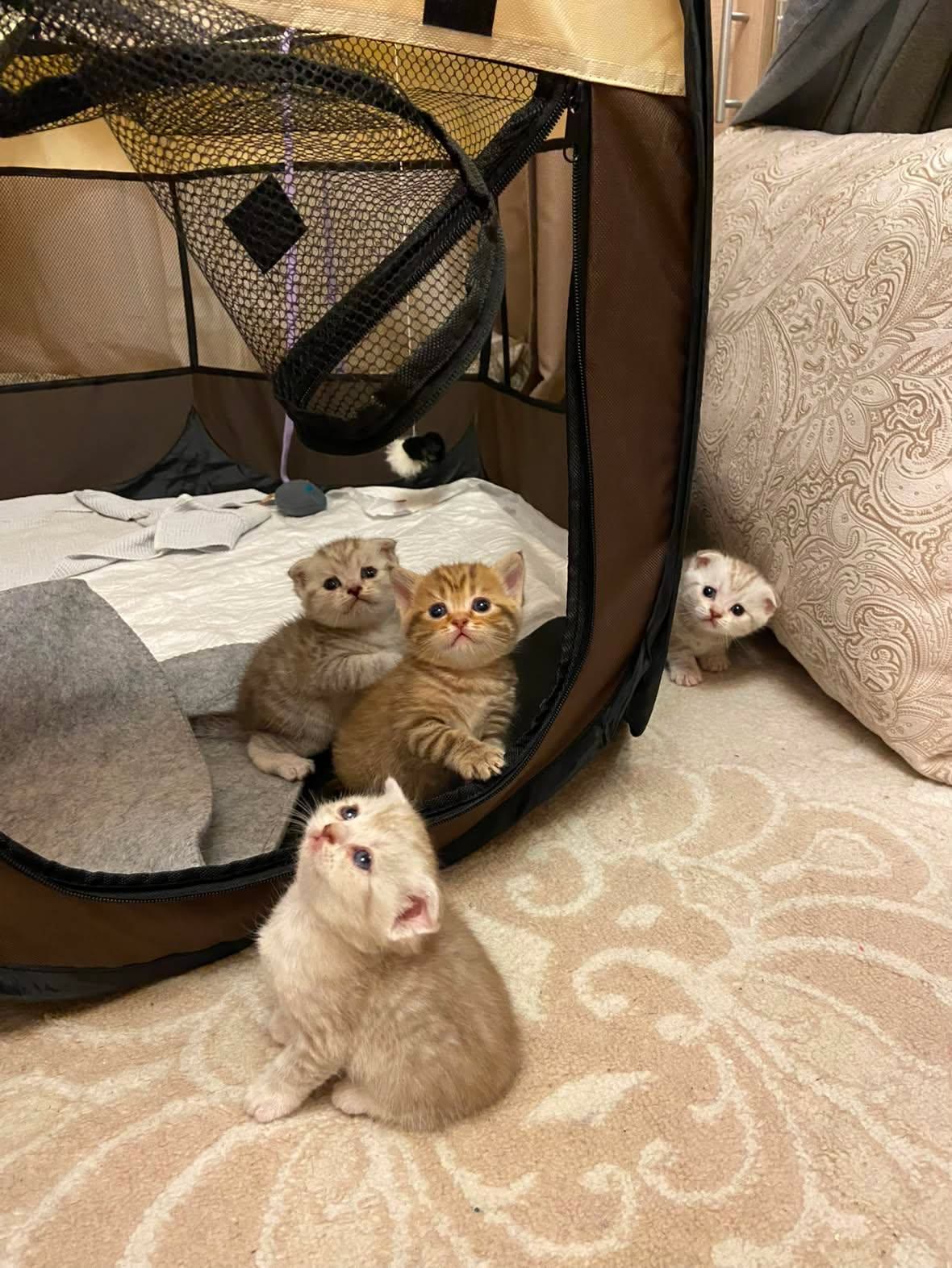
- Space. A litter of six fills any small box fast. In Tasya’s photos, the setup is a foldable mesh playpen — it keeps the kittens contained without cramming them into a tight space, and still lets the mother step out to rest on her own when she needs to.
- Wear on the mother. Nursing six costs more energy than nursing two. High-calorie food (the same kind recommended for a pregnant cat) and constant water access matter more during this stage.

What to expect at each stage, up to 1 month
- Up to 10 days: eyes still closed, fully dependent on the mother for feeding and elimination.
- 2 to 3 weeks: eyes open, first wobbly steps, starting to react to sound.
- 1 month — the kittens’ age in the photos: already walking, exploring, playing with each other, and starting to try mashed food, though still nursing.
The most recent photos show exactly that stage: kittens on their feet, curious, peeking through the playpen mesh — normal behaviour for kittens discovering there’s a world beyond the corner where they were born.
Why the first weeks of handling matter so much
Between roughly two and seven weeks of age, kittens go through what’s generally considered their key socialization window — the period when brief, gentle exposure to human hands, everyday household sounds, and eventually other calm animals has an outsized effect on the adult cat they become. With six kittens instead of two, it’s easy for handling time to get spread thin without meaning to, simply because there’s more litter to get through in the same number of minutes. A few minutes of calm, individual handling per kitten per day — picking each one up, talking softly, letting them get used to being touched on paws and ears — pays off later in a cat that’s easier to handle at vet visits and less likely to be skittish with new people. It doesn’t need to be elaborate or scheduled; it just needs to actually happen for each kitten, not just the boldest ones who climb into your lap first.
Getting six kittens ready for adoption
A litter this size usually means staggering vet visits and paperwork rather than doing everything on one day. Kittens typically start their first vaccinations and deworming around 6-8 weeks, with a vet best placed to confirm timing and schedule for the specific litter. Litter box habits are mostly learned by watching the mother, so kittens raised alongside her tend to be reliably trained well before they’re ready to leave — worth confirming with whoever is placing them, since it’s one less thing new owners have to teach from scratch. Because littermates learn a lot of their social skills and bite inhibition from each other, most guidance favors keeping kittens with their mother and siblings until at least 8 weeks, sometimes longer, rather than rehoming early just because a home is ready sooner.
When to call the vet
A healthy litter nurses, sleeps a lot, and gains weight day over day. Warning signs: a kitten who can’t latch, cries constantly, feels cold to the touch, or hasn’t gained weight in 48 hours. In these cases, a vet visit is urgent — a newborn kitten has no energy reserve to wait it out.
After the second litter
Tasya was spayed the year after this birth. It wasn’t a decision made ahead of time — plenty of people only get around to spaying after going through a big litter and seeing firsthand how much care it takes. Today she has no more kittens, and this was the last litter in the story.
Frequently asked questions
Is six kittens in a litter a lot?
It’s above average (2 to 5), but within normal range, especially for a young cat. What changes is the care demand, not the litter’s health on its own.
At what age do kittens open their eyes?
Usually between 7 and 14 days. Eyes still closed after 3 weeks is a reason to see a vet.
Do I need to hand-feed the kittens?
No, not if the mother is present and nursing normally. Manual feeding is only needed if a kitten is rejected or can’t latch.
At what age does weaning start?
Around 4 weeks, with mashed or moistened food introduced gradually, without stopping nursing all at once.