
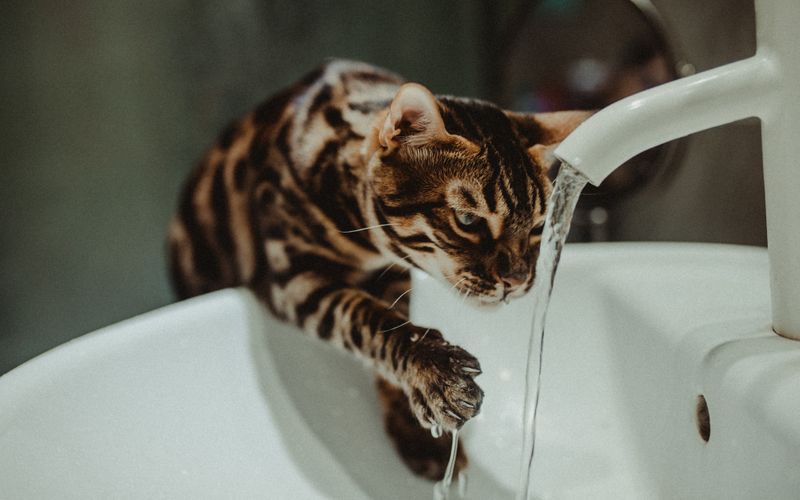
When a cat water fountain suddenly stops pumping water — or starts making a rattling hum without any stream coming out of the spout — most cat parents assume the motor has burned out and throw the fountain away. In reality, roughly 9 out of 10 “dead” fountain pumps are not broken at all: their magnetic impeller is simply jammed by hair, mineral scale, or invisible saliva biofilm.
Before you buy a replacement pump or a new fountain, grab a pair of tweezers, a cotton swab, and white vinegar. Here is the exact 5-minute disassembly method that revives almost any 5V USB submersible cat fountain pump — plus how to tell when it is time to upgrade to one of our best stainless steel cat water fountains.
Why Cat Fountain Pumps Stop Out of Nowhere
Nearly every modern cat fountain (including PETLIBRO, Catit, PETKIT, Veken, and generic stainless models) uses a brushless magnetic rotor pump. Instead of gears, a tiny plastic fan blade attached to a cylindrical magnet spins inside a sealed electromagnetic well.
| Symptom | Most Likely Cause | Can You Fix It at Home? |
|---|---|---|
| 1. Pump hums or vibrates, but zero water flows | Cat hair wrapped around the impeller pin or slime jamming the magnet | Yes (95% success rate) — open the stator cap and clean the rotor |
| 2. Pump is completely silent, LED light is off | USB power adapter failure or dry-burn sensor tripped | Yes — refill above MIN line and test with a standard 5V/1A phone brick |
| 3. Weak trickle even when the tank is full | Sponge pre-filter clogged or calcium scale narrowing the spout tube | Yes — rinse pre-filter sponge and soak the impeller in vinegar |
| 4. Loud grinding noise even after cleaning | Worn ceramic shaft or cracked magnetic cylinder | No — requires a $9–$12 replacement USB pump or fountain upgrade |
Daily Cat Hydration Calculator & Fountain Matcher
Based on feline veterinary guidelines (~50 ml of water per kg of body weight daily). Enter your cat's weight and habits to see their exact fountain target:
Step-by-Step: How to Open and Unjam a Cat Fountain Pump in 5 Minutes
Even if your fountain manual never mentioned it, every submersible cat fountain pump is designed to snap open into 3 pieces without tools:
Step 1: Unplug the USB cable and remove the sponge pre-filter
Disconnect the fountain from the wall adapter first. Pull the black foam pre-filter off the front of the pump and rinse it under warm tap water. If the foam is slimy or matted with fur, water cannot even enter the intake grille.
Step 2: Pop off the front intake faceplate
Look closely at the side of the pump housing: you will see a tiny fingernail notch. Wedge your fingernail, a butter knife, or the tip of a spoon under that lip and pop the plastic front cover off.
Step 3: Remove the inner stator cap
Underneath the front cover sits a second small tear-drop or round plastic cap covering the fan blades. Pry that cap upward gently — it is held only by friction tabs.
Step 4: Pull out the magnetic impeller with tweezers
Now you will see the tiny white or black plastic fan blade (the impeller). Grab one blade with your fingers or tweezers and pull straight up. It slides right off a thin stainless steel or ceramic pin. Look at the bottom of that magnet cylinder and around the pin: you will almost certainly find a tight ring of cat hair or slippery clear biofilm (“slime”) locking the magnet in place.
Step 5: The 10-minute white vinegar soak
Drop the magnetic impeller and the two plastic caps into a cup of 50% warm water and 50% white vinegar for 10 minutes. Use a cotton swab (Q-tip) dipped in vinegar to scrub down inside the round magnetic well of the pump body until no slippery film or white mineral crust remains. Rinse everything thoroughly, drop the impeller back onto the pin, snap both caps back on, and plug it in submerged in water.
3 Mistakes That Burn Out Cat Fountain Pumps Prematurely
- Letting the water drop below the MIN line: Submersible pumps rely on water for cooling and lubrication. Running dry for several hours overheats the coil unless the pump has an automatic dry-run shutoff sensor.
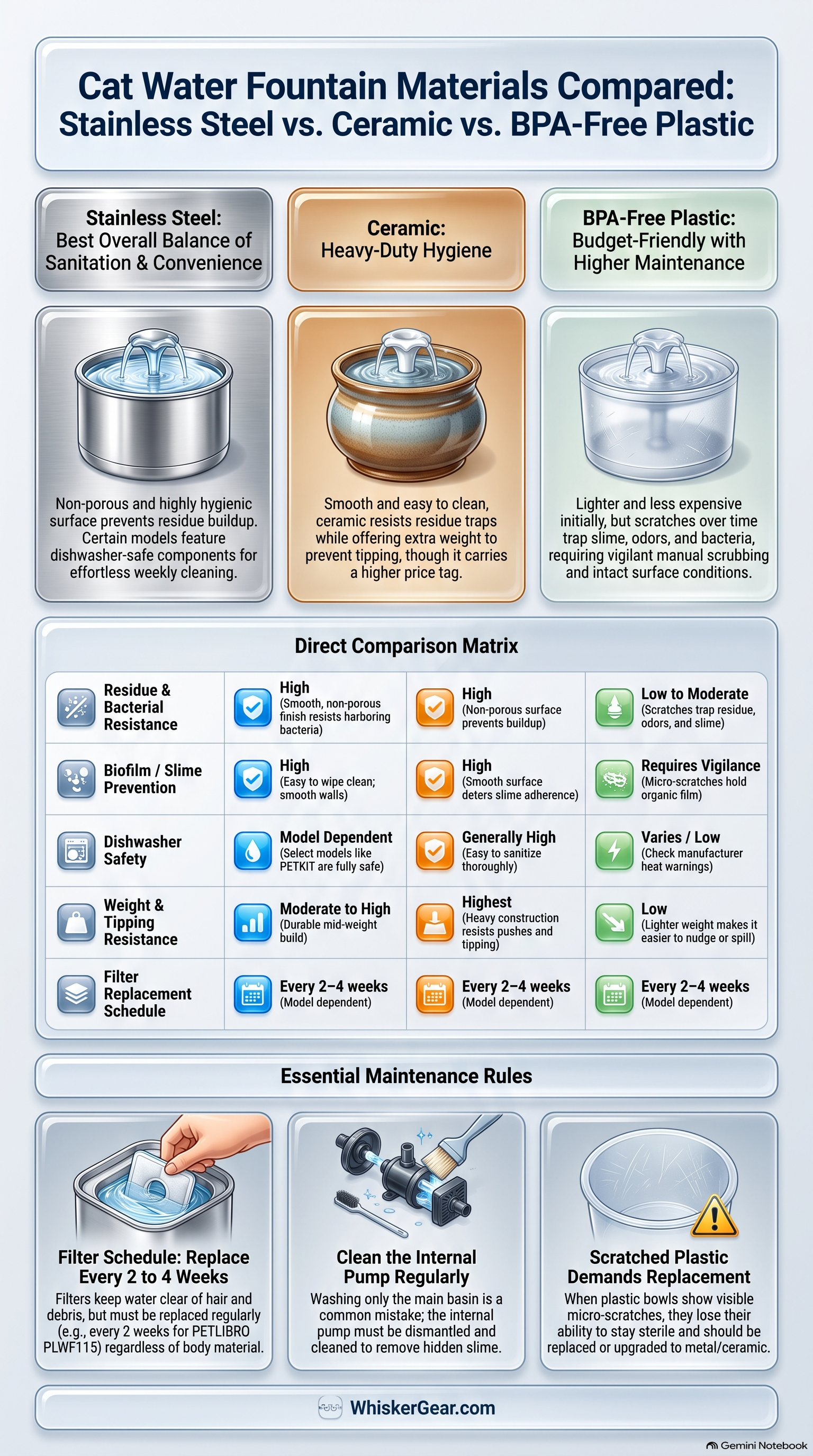
- Washing only the bowl and ignoring the impeller: Rinsing the top tray while leaving slime inside the magnet well forces the motor to work twice as hard until it stalls.
- Using scratched plastic fountains in hard-water homes: Plastic trays trap feline saliva bacteria and calcium scale much faster than 304 stainless steel cat fountains, clogging the pump every 7 to 10 days.
When to Replace the Pump vs. Upgrade the Fountain
If you pulled the impeller out, scrubbed the magnetic well, tested a different 5V USB wall plug, and the rotor still refuses to spin (or rattles loudly because the central pin is bent), the motor coil has failed. You have two smart options:
- If your fountain tray is already 304 stainless steel or ceramic: Simply check the model number printed on the pump sticker (usually DR-DC160 or similar 5V USB pump) and grab a replacement pump for $9–$14.
- If your current fountain is all-plastic: Don’t spend money replacing the pump on a scratched plastic basin. Upgrade to our #1 pick in our Best Cat Water Fountains (2026 Tested Guide) — models like the PETLIBRO Stainless Steel Fountain and PETKIT Wireless-Pump Fountain eliminate submerged cord grime and feature automatic low-water shutoff.
Frequently asked questions
How often should I open and clean the inside of a cat fountain pump?
Open the pump faceplate and pull out the magnetic impeller every 2 weeks (every 14 days) when you rinse or swap the carbon filter. If you have multiple long-haired cats or hard tap water, doing a 30-second cotton-swab wipe inside the rotor well once a week keeps the pump whisper-quiet below 30 dB for years.
Why is my cat fountain blinking red and not pumping?
On smart fountains and newer USB pumps with water-shortage sensors, a solid or blinking red LED means the float sensor or optical sensor detects low water. Refill the tank above the MAX/MIN line; if the tank is already full, wipe the sensor contacts or pop the magnetic float inside the pump track free of mineral buildup.
Is white vinegar safe for cleaning a cat water fountain pump?
Yes. Plain white distilled vinegar (diluted 1:1 with warm water) is 100% non-toxic to cats and dissolves calcium carbonate scale that dish soap cannot touch. Just rinse the pump parts under clean tap water for 20 seconds before reassembling so no sour vinegar scent remains.
Get the Cat Parent Safety & Gear Checklist (Free)
Join 1,000+ cat parents: get instant access to our 1-page Home Safety, Litter Ratio & Emergency Vet Checklist — plus one short email when we publish a new guide.