
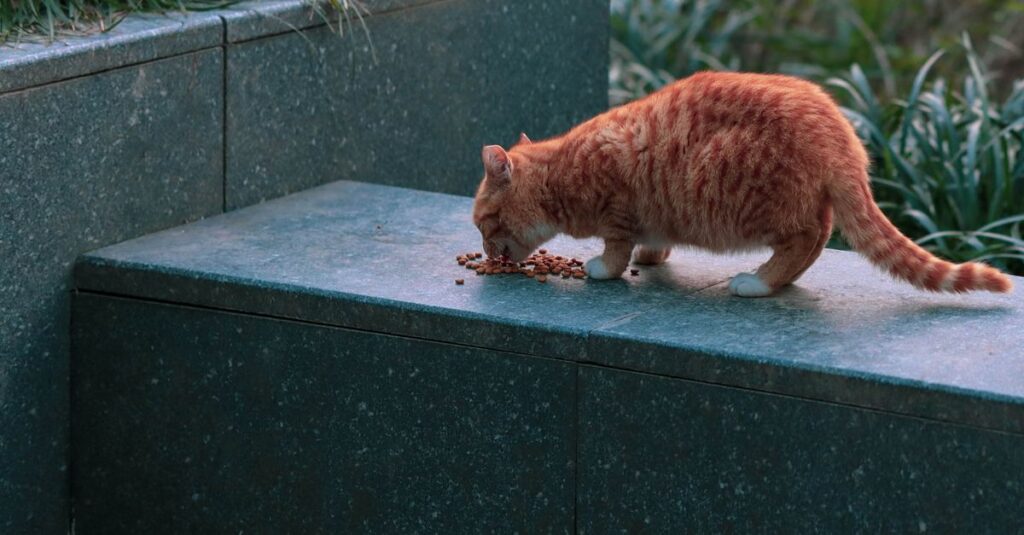
Your cat inhales its food in thirty seconds, then brings most of it back up minutes later, almost whole? That has a name: regurgitation from eating too fast. Most of the time it is not a disease, it is just speed. And it is cheap to fix.
Why it eats so fast
Some cats race through food because of competition when they share a home with others. Some learned to attack the food when it shows up, out of anxiety or from going too many hours between meals. When food goes down whole and fast, the stomach pushes back and sends it up.
The difference between regurgitating and vomiting matters. In regurgitation, the food comes up almost intact, right after eating, with little effort. Real vomiting comes with heaving and more digested contents. If it is frequent vomiting, that is worth a vet visit.
How to slow your cat down
- Slow feeder bowl. Ridges force the cat to eat in small bites. This is the most direct and cheapest fix.
- Spread the food on a mat or large plate. More surface area already cuts the speed.
- Split into more, smaller meals. Less food at a time, more times a day.
- Separate the cats at mealtime if competition is the trigger.
- An automatic feeder with timed portions helps if you are out all day, since it avoids the long fast that drives anxious eating.
When to see the vet
Get help if the vomiting is frequent, has blood, or if the cat loses weight, gets listless, or stops eating. Eating fast and regurgitating now and then is common. What is not normal is recurring vomiting with a run-down cat.
Why competition and anxiety drive fast eating in the first place
Multi-cat households are the classic setup for this, even when the cats otherwise get along fine. A shared food bowl, or even separate bowls placed close together, puts cats into a subtle race, and evolution has not given them any reason to eat slowly when a rival might finish the good stuff first. The fix is not always a slow feeder, sometimes it is simply feeding cats in different rooms, or at opposite ends of the kitchen, so nobody feels like they are racing the clock.
The anxiety-driven version shows up in single-cat homes too, usually in cats that were strays, came from a shelter, or otherwise went through a period of food scarcity earlier in life. That history can leave a lasting habit of eating as fast as possible whenever food appears, long after the cat is safe and well fed. Patience helps here more than any gadget: consistent meal times, in a calm and predictable spot, slowly teach the cat that food will keep showing up and there is no need to rush it.
Introducing a slow feeder without a fight
Some cats give up on a slow feeder in the first few minutes if the ridges are too aggressive for their patience level. It works better to start with a gentle, shallow-ridge design, or even just spreading kibble across a flat plate, and only move to a more complex puzzle-style feeder once the cat is used to working a little for its food. A cat that seems to be losing weight or getting frustrated rather than adapting to a slow feeder within a week or two is a sign to switch back to an easier design rather than push through it.
FAQ
Do slow feeders actually work?
They work for most cats that bolt their food. Start with a gentle-ridge design, since some cats give up if it is too hard.
Could it be a hairball?
It could, and that is a different case. Hairballs usually come with heaving and hair in the mix. Eating too fast brings food up almost intact, with no hair.
Can stress unrelated to mealtime also cause fast eating?
Yes. General household stress, a new pet, a move, or changes in routine can all make a cat eat faster or more anxiously than usual. If fast eating shows up suddenly alongside other behavior changes, it is worth thinking about what else changed at home, not just the food routine.
If long fasts are part of the problem, read our guide on the automatic cat feeder.