
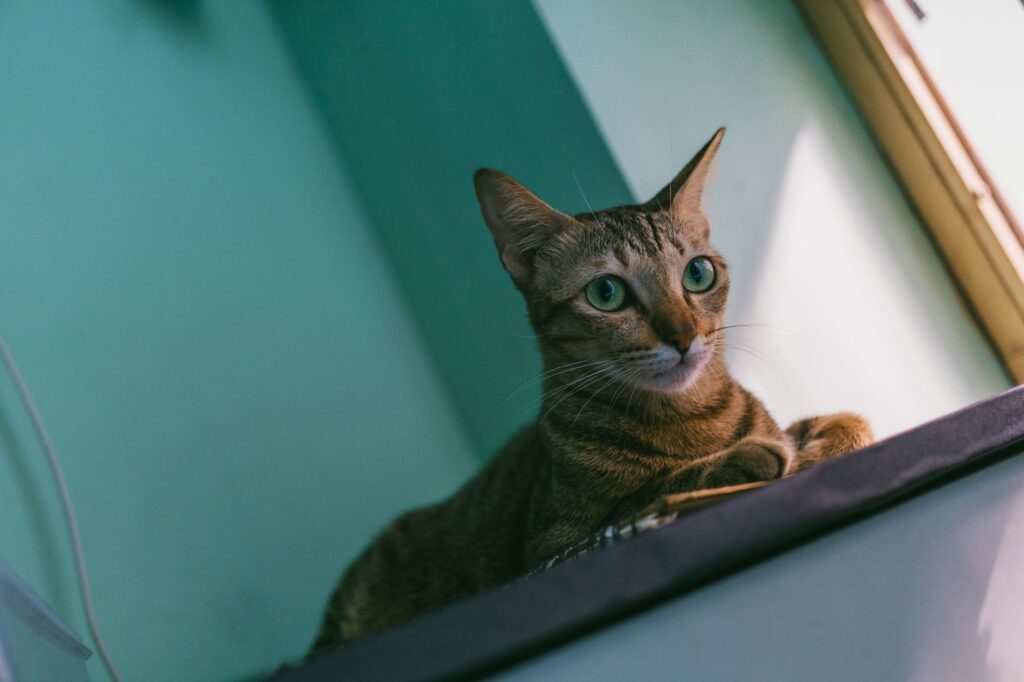
There is a particular stillness that settles over a house when a cat finds a good window. Four paws planted on the sill, head tilted just enough to catch the light, and for thirty uninterrupted minutes the room is hers. It is one of those stretches of feline behavior that owners notice before they have a name for it — and once they do, many start looking for a way to make it more comfortable, more stable, and safer for the window involved.
A cat window perch is any seat, hammock, or platform designed to attach to a window frame, wall, or sill so a cat can observe the outside world from an elevated, stable position. That simple description covers a surprisingly wide range of products, and the differences between them matter more than the label suggests. The right choice depends heavily on the window type, the frame material, how often the window is opened, and the cat’s size and temperament — not on which product looks best in a photograph.
Fast Facts
- What they are: Window-mounted seats or hammocks that give a cat a stable, elevated perch facing the outdoors.
- Main types: Suction-cup perches, window hammocks (fabric-on-frame), wall-mounted shelf/perches, and reinforced sill extenders.
- Best for: Indoor cats with regular window access; particularly useful in apartments where floor space is limited.
- Not a substitute for: A properly screened or secured opening — a perch does not make an unsafe window safe.
- Vet note: Cats who spend long periods at a window benefit from the mental enrichment, but owners should watch for obsessive fixation or signs that the cat is overstimulated by outdoor activity (persistent pacing, vocalizing, redirected frustration when the window is closed).
Comparing options? You can browse cat window perches on Amazon. Check the attachment method, weight guidance, and your window setup before buying.
Why Cats Care About Windows
A window is, from a cat’s perspective, the cheapest form of entertainment available in a home. It is movement, sound, shifting light, and novelty — all in a single fixed point — without requiring the owner to throw a toy or open a can. In feline behavior literature and in the practical experience of shelters and breeders, window access is routinely listed as one of the cheapest and lowest-effort forms of environmental enrichment a household can provide.
The appeal is straightforward. Outdoors, birds move unpredictably, leaves rustle, people pass, insects flutter, and cars appear and disappear. For a species whose natural history includes regular low-intensity monitoring of surroundings, that stream of small events is genuinely engaging. Owners often describe the effect casually — “she spends the morning watching the feeder” — but the underlying mechanism is closer to what enrichment specialists mean when they talk about mental stimulation through varied, non-threatening sensory input.
There is also a spatial dimension. Many cats prefer to observe from an elevated position because height gives a broader field of view and, in instinctive terms, a better vantage. This is not a hard rule — some cats will happily patrol the sill at floor level — but enough owners report a preference for “higher is better” that perches and shelves exist as a category in the first place. The same preference is visible in the broader cat-furniture world: cats often choose the top tier of a cat tree over the lower platforms, and the reasoning is similar here.
For households with more than one cat, a window perch can also function as a shared observation point — or, depending on the cats’ relationship, as a mildly contested one. Either way, it tends to reduce the amount of time cats spend searching the room for something to do, which is part of why enrichment-focused owners value it.
The Types of Window Perches
Suction-Cup Perches
Suction-cup window perches are the most common category in the consumer market. A padded seat or small platform is held against a smooth glass surface by one or more suction cups, usually with a hook-and-loop or strap attachment to the frame for secondary security. They are popular precisely because they are easy to install: no drilling, no hardware on the wall, and the holder can usually be removed and moved to another window in minutes.
The downsides are real and worth stating plainly. Suction cups rely on a smooth, clean, non-porous surface and on a consistent seal. Over time, temperature changes, humidity, repeated loading and unloading, and the micro-scratches that accumulate on glass can weaken the hold. A perch that felt perfectly secure on day one can shift, creak, or lose adhesion weeks later — not usually to the point of a sudden fall, but enough that an owner should inspect it regularly and re-seat or replace the cups on a schedule rather than assume it is permanent.
The load rating printed on a product is a starting point, not a guarantee. Manufacturers test under controlled conditions; real-world glass varies, window frames flex differently, and cats are not static weights — they shift, stretch, knead, and sometimes jump onto a perch from a nearby surface with more force than a gentle step. Owners who report problems with suction-cup perches most often describe a gradual loosening rather than a catastrophic failure, but the category does require ongoing maintenance.
What makes a good one: a broad contact area for the suction cups, a weight rating comfortably above the cat’s expected weight (with margin), a textured or well-lined seating surface so claws do not slide, and ideally a secondary attachment — a strap or bracket — that reduces reliance on the cups alone. Products with a single small suction point and a high advertised weight limit deserve a skeptical eye.
Window Hammocks
Window hammocks are fabric seats stretched across a frame or attached directly to the window frame with straps or hooks. Instead of a rigid platform, they use a soft, suspended surface that sags slightly under the cat’s weight — which many cats find comfortable and which can feel more natural to a cat used to settling into soft surfaces.
They share the suction-cup perch’s advantage of not requiring drilling, and they often look more integrated with a room than a hard plastic platform. They are also generally quieter in use: a cat settling into a fabric hammock makes less of the click-clack sound that a hard perch can produce against glass.
The tradeoffs are similar. The attachment method matters enormously — a hammock that relies entirely on a single strap around a frame that is not structurally sound is not a good idea. Smooth metal frames, very narrow frames, and frames with irregular surfaces may not hold a strap securely. The fabric itself needs to tolerate repeated use: claws, kneading, and the occasional scratch from a cat settling in aggressively can wear fabric faster than owners expect, particularly on cheaper models. Removable, washable covers are a practical feature, since a window perch will accumulate dust from the window area and fur from the cat over time.
Wall-Mounted Perches and Shelves
Wall-mounted window perches avoid the suction-cup problem entirely by anchoring into the wall or window frame with screws or brackets. They are the most secure option structurally, and they tend to feel permanently part of the room rather than like something that might need attention every few weeks.
The cost of that security is installation complexity. A proper wall-mounted perch requires finding appropriate anchor points — not every wall near a window can take a screw load, and not every window frame has a solid structural member to bite into. Drywall alone, without a stud or anchor rated for the load, is not enough. Rental households may be unable or unwilling to drill near windows. And once installed, moving the perch is not a matter of unhooking it; it requires patchwork and another installation elsewhere.
For owners who can install one properly and want a permanent solution, this is often the most reliable category. It is also the most adaptable: a well-placed shelf near a window can serve as both a perch and a general climbing/resting point, which matters for households with multiple cats or for cats who like to move between vantage points.
Sill and Ledge Extensions
Some windows — particularly casement, awning, or older double-hung styles — have a narrow sill that a cat can stand on but not settle on comfortably. A sill extender or ledge pad adds a bit of depth and sometimes a padded surface so the cat has room to lie down rather than perch on the edge.
These are the least obtrusive option and often the least expensive. They are also the most dependent on the specific window geometry: an extender that works on a deep sill will not necessarily fit a narrow one, and an extender on an opening window needs to be removed or secured before the window is opened. Owners who open their windows regularly should check that the product does not become an obstruction or a hazard when the window moves.
What Matters More Than the Label
When owners compare window perches, the label “window perch” or “window hammock” tells them very little. The questions that matter are:
- How is it attached? Suction alone, strap around the frame, screw anchor, or a combination. The more independent attachment points, the less a single failure matters.
- What is the surface facing? Glass, frame, or wall. Glass is smooth and consistent but requires clean, intact suction cups; frames vary widely and may not be structurally solid where the strap sits.
- How often is the window opened? A perch that is in the way of an opening window is a nuisance at best and a hazard at worst. Owners who open windows regularly should think about whether the perch can be removed quickly, or whether it should be installed only on windows that stay closed.
- What is the cat’s normal weight and behavior? A product rated for the cat’s weight is the minimum, not the target. A cat that jumps onto the perch rather than stepping onto it carefully, or that kneads aggressively, puts different stress on the attachment than a cat who steps on gently and settles.
- Is the perch a fall risk? This is the question most owners skip. A perch placed at a height where a slip or a startled leap could result in a meaningful fall is not a good idea, regardless of how secure the attachment seems. The height of the window above the floor, the distance to the nearest soft surface, and whether the cat tends to panic-jump all matter.
The last point connects directly to the broader safety context of windows in a home with cats. For owners in buildings above ground level, or with windows that overlook a hard surface, the perch is only part of the picture — the opening itself needs to be safe. (For a deeper look at why windows and cats can be a risky combination, and what the common failure modes are, see High-Rise Syndrome: Why Cats Fall From Windows.)
Related to the Room You Already Have
A window perch does not exist in isolation. Many households already have a screened balcony, a net-covered opening, or a window with a restrictive screen, and those existing setups shape what perch makes sense.
If the window or balcony already has a screen, the first question is whether that screen is the kind that a cat can rely on — or the kind that a cat should not be leaning on. Not every mosquito screen, framed net, or removable attachment is designed for the repeated load of a cat pressing, kneading, or jumping against it. (For a breakdown of the different screen types and what they actually hold up to, see Framed, Netting or Removable: Which Screen Actually Protects a Cat and Will a Mosquito Screen Hold a Cat? It Depends Which One.)
For households working on making an outdoor-access space usable for a cat, a window perch is often part of a larger setup rather than the whole of it. A screened balcony that the cat actually uses comfortably is a bigger win than a perch inside, but the perch can still play a role — particularly for cats who prefer to watch without going out, or for weather and seasonal days when the balcony is off-limits. (For more on that setup, see Screened Balcony: How to Make Your Cat Actually Use It.)
The perch can also fit into the broader question of where a cat likes to rest in the house. Cats often develop strong preferences for specific locations and surfaces, and a window perch is one more option in that landscape — not automatically the one a cat will choose. An owner who expects the perch to be the new favorite spot and is disappointed when the cat ignores it is missing the point: the perch is an offered resource, and whether the cat adopts it depends on habit, temperament, window view, and how it is positioned relative to other resting spots. (For more on that broader question, see Where to Put Your Cat’s Bed and The 6 Best Cat Beds for Every Sleep Style (2026).)
Installation and Ongoing Use
For suction-cup and strap-on-frame products, the installation is usually straightforward on the day, but the follow-through matters more than the install.
- Clean the surface first. Glass or frame dust, oils, and residue reduce suction and strap grip. Wipe the contact area before attaching, and let it dry fully.
- Check the fit before trusting it. Press the perch into place, load it gently with your hand, and look for any shift, slip, or gap in the seal. If it moves under a hand load, it will not hold a cat reliably.
- Re-check on a schedule. For suction-cup products, a periodic inspection — every few weeks at first, then monthly — catches the gradual loosening that is the most common failure mode. For strap-on-frame products, check that the strap has not loosened, slipped, or worn.
- Watch the cat the first few times. A cat’s first session on a new perch is the best time to notice whether they are stepping on confidently or hesitating, and whether the perch shifts under their weight in a way you did not see during the hand-test.
- Clean the perch itself. Dust from the window area, cat fur, and the occasional crumb accumulate on perches just as they do on any other cat furniture. Removable covers and wipeable surfaces make this easier.
For wall-mounted solutions, the installation checklist is more about structure than about surface prep: anchor into a solid point, verify the load rating of the hardware, and do not rely on drywall alone for a perch that will see a cat leaping or shifting weight. If you are unsure whether the wall or frame near the window can take the load, that is a reason to choose a different type or a professional opinion, not a reason to proceed and hope.
Kittens, Seniors, and Cats with Mobility Concerns
Kittens are enthusiastic, unpredictable, and not yet consistent in their grip and landing. A kitten on a window perch is a kitten discovering that the perch is amusing, not necessarily using it the way the manufacturer imagined. That does not mean kittens should never use one, but it does mean that a product chosen for a calm adult cat may need a more secure attachment for a kitten, and that close observation during the first sessions is especially important.
Senior cats and cats with mobility or balance issues have the opposite problem: they may want the window rest more than a younger cat does, but they are also more vulnerable to a slip, a poor landing, or a perch that is awkward to step onto. A perch with a generous, accessible entry — not one reached by a jump from another surface — is better for a cat with stiffness or balance concerns. A soft, stable surface with a clear approach is generally preferable to a narrow, high, hard-edged perch. For cats with known mobility issues, the perch should be treated as a comfort feature, not as a challenge to be overcome.
FAQ
Is a window perch safe for apartments above the ground floor?
A window perch itself is not what makes a high window safe or unsafe — the window and its opening do. A perch attached securely to a closed window above the ground floor can be perfectly fine as an observation point. What it should not do is encourage a cat toward an opening that is not properly secured, or onto a surface where a startled leap would lead to a dangerous fall. If you live above ground level and your cat has window access, the perch is only one part of the setup; the window protection is the other. For the underlying safety context, see High-Rise Syndrome: Why Cats Fall From Windows.
What is the difference between a suction-cup perch and a window hammock?
A suction-cup perch is usually a rigid seat or small platform held by suction cups against glass. A window hammock is a fabric seat suspended from the window frame, often with straps or hooks rather than suction. The hammock tends to be softer and quieter, and some cats prefer settling into fabric; the suction perch is usually easier to reposition and cleaner in its attachment. Which is better depends on the cat’s preferences and the window setup, not on which one is “advanced.”
Do cats actually use window perches, or do they ignore them?
Both happen. Some cats take to a window perch immediately and use it daily; others investigate once and never return. A perch is an offered resource, and cats are not obligated to prefer it. Positioning, the quality of the view, the comfort of the surface, and whether the cat already has a preferred window-related spot all influence whether the perch is used. An ignored perch is not necessarily a bad perch — it may just be placed somewhere the cat does not prefer, or the cat may prefer the bare sill.