
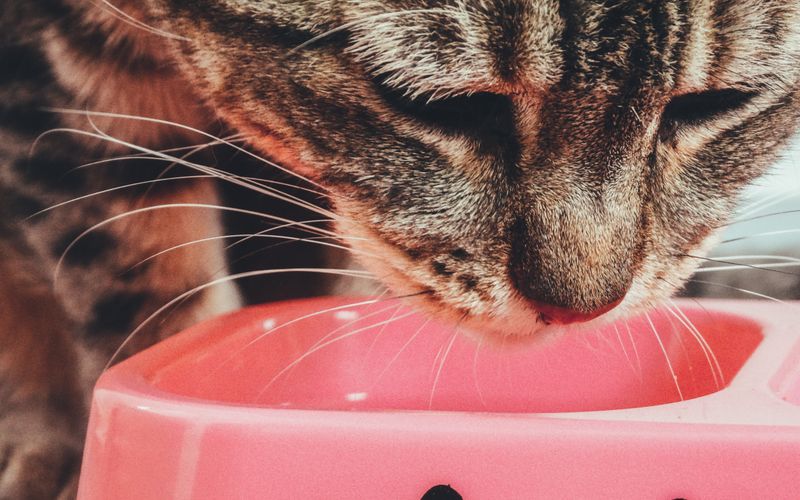
You bought an automatic feeder so your cat would stop waking you up at 5:00 AM — but the very first time the motor whirred and kibble clattered into the stainless steel bowl, your cat puffed their tail, bolted under the sofa, and refused to walk into the kitchen. If you have a skittish or rescue cat, that sudden mechanical noise right where they eat feels like an ambush.
Cats are both predators and small prey animals: when their heads are lowered into a bowl, their peripheral vision is blocked, making them hyper-sensitive to unexpected sounds. The good news is that you do not need to return your feeder. Using this 7-day Pavlovian desensitization protocol, even the most anxious cat will go from hiding under the bed to sprinting happily toward the feeder the second it clicks.
Why Automatic Feeders Scare Anxious Cats (The 2 Noise Triggers)
When a cat panics around an automated dispenser, they are reacting to two separate sounds happening at the exact same second:
| Noise Trigger | Why It Startles Cats | Instant Acoustic Fix |
|---|---|---|
| 1. Kibble Clattering on Metal (~60 dB) | Hard dry kibble falling 6 inches onto an empty stainless steel bowl sounds like hail on a tin roof | Keep a thin base layer of kibble in the bowl or place a silicone mat underneath |
| 2. Dispensing Rotor Hum (~40–45 dB) | Sudden high-torque electric motor spin in a quiet room | Place the feeder on a foam/silicone mat away from echoing corner walls |
| 3. Voice Recording Playback | Tinny, distorted human voice from a tiny speaker often sounds eerie to cats | Turn OFF voice recording completely — the natural sound of falling kibble is enough |
Daily Kibble Portion & Anti-"Scarf and Barf" Schedule
Splitting your cat's daily allowance into smaller automated drops prevents regurgitation and stops 5 AM wake-up calls:
The 7-Day Step-by-Step Desensitization Plan
Never take away your cat’s old bowl on Day 1 and expect Hunger to force them to use the machine — cats who feel unsafe around their food station can develop stress-induced anorexia or hepatic lipidosis. Follow these 4 phases instead:
Days 1–2: The “Silent Statue” Phase (Unplugged)
Place the new automatic feeder 3 to 4 feet away from your cat’s regular food bowl, completely unplugged. Put a few of their favorite high-value freeze-dried treats or a teaspoon of kibble inside the feeder’s tray by hand. Let your cat discover that this strange plastic tower is 100% silent, harmless, and occasionally grows free treats.
Days 3–4: Muffle the Bowl & Feed Side-by-Side
Still keeping the machine unplugged (or scheduled off), move your cat’s daily meals into the automatic feeder’s removable stainless steel bowl placed right in front of the machine. Acoustic trick: place a thick silicone feeding mat under the feeder so floor vibrations disappear, and make sure the voice-recorder chime is muted.
Days 5–6: Trigger a Manual Drop From Across the Room
Wait until your cat is in the same room — at least 8 to 10 feet away from the feeder, NOT with their head inside the bowl — right before their normal dinner time when they are hungry. Trigger a single 1-portion drop (using the smartphone app on Wi-Fi automatic cat feeders or the manual button), then immediately toss one treat halfway toward the feeder and walk away calmly. Do not stare at your cat or coax them; let curiosity win at their own pace.
Day 7+: Activate the Automated Schedule
Once your cat walks up to investigate the bowl within 2 minutes of hearing the drop, turn on your daily schedule (4 to 5 small meals per day works best). Within 72 hours, classic conditioning takes over: the tiny click of the rotor before the motor spins becomes your cat’s favorite sound in the house.
Hardware Features That Help Skittish Cats
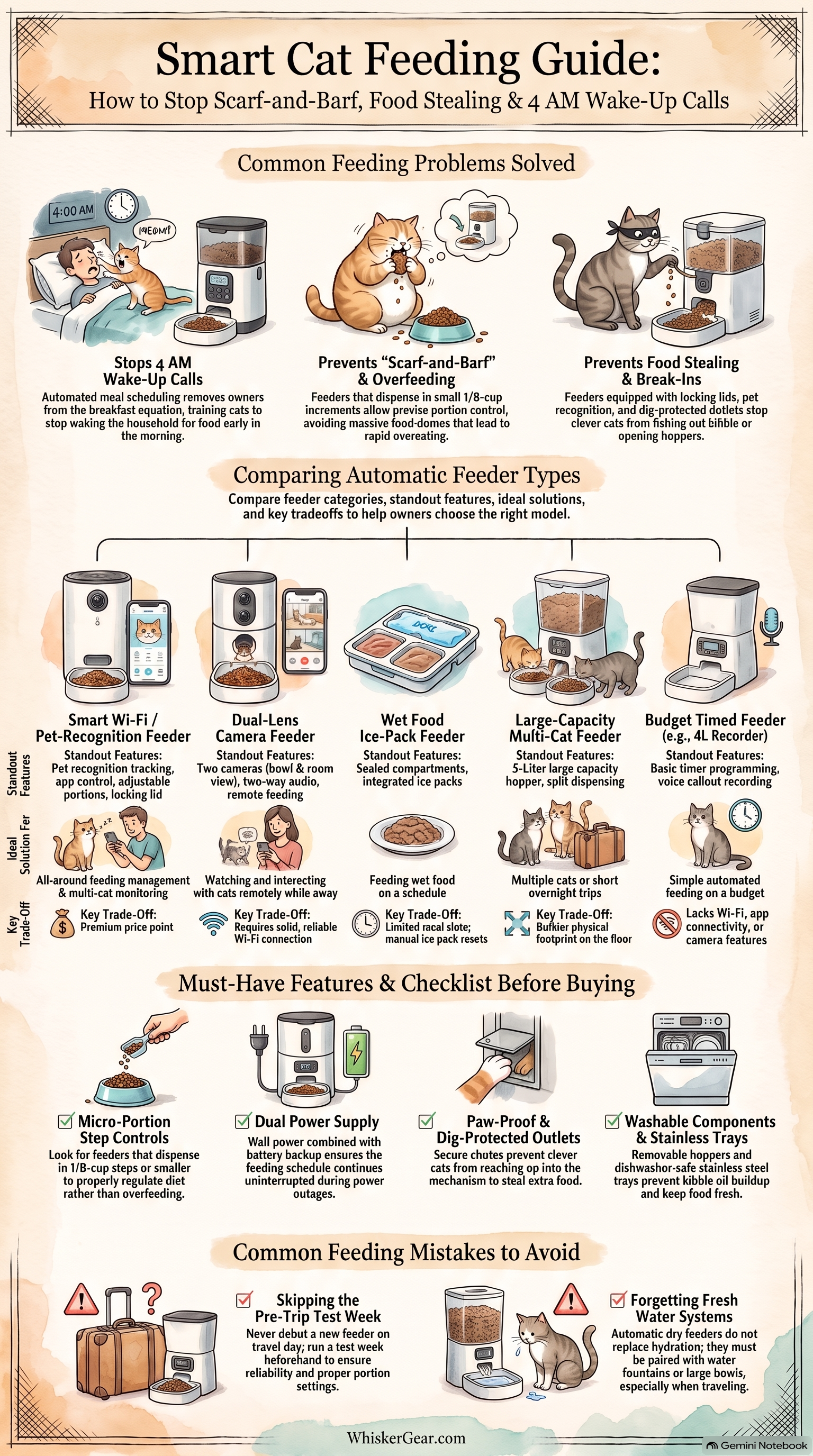
If you are still shopping or comparing models in our Best Automatic Cat Feeders (2026 Tested Guide), look for these three anxiety-friendly details:
- Wide, shallow 304 stainless steel dish: Prevents “whisker fatigue” (when sensitive whiskers brush against deep, narrow plastic walls, making the cat feel trapped while eating).
- App-controlled silent mode: Lets you disable button beeps, low-food alarms, and voice memos completely.
- Anti-jam silicone rotor blades: Soft silicone impeller paddles turn much more quietly than rigid plastic gears crunching through kibble.
Frequently asked questions
Should I record my voice on the automatic cat feeder for an anxious cat?
No. While voice recording is marketed as a comforting feature, the tiny speakers inside pet feeders compress and distort high frequencies. To a cat’s ultra-sensitive ears, that sudden robotic burst of sound is usually far scarier than the quiet whir of the motor alone. Leave the voice memo at 0 seconds.
How long does it take for a scared cat to use an automatic feeder?
Most mildly cautious cats adapt within 3 to 5 days when the feeder is introduced unplugged first. Highly skittish rescue cats or seniors may take 7 to 14 days — the key is triggering the first motor drops while the cat is across the room rather than standing right over the bowl.
Where is the best place to put an automatic feeder for a nervous cat?
Avoid tight corners, laundry rooms next to noisy appliances, or narrow hallways where your cat feels cornered with no escape route. Place the feeder against an open wall where your cat has a clear 180-degree view of the room while eating.
Get the Cat Parent Safety & Gear Checklist (Free)
Join 1,000+ cat parents: get instant access to our 1-page Home Safety, Litter Ratio & Emergency Vet Checklist — plus one short email when we publish a new guide.