
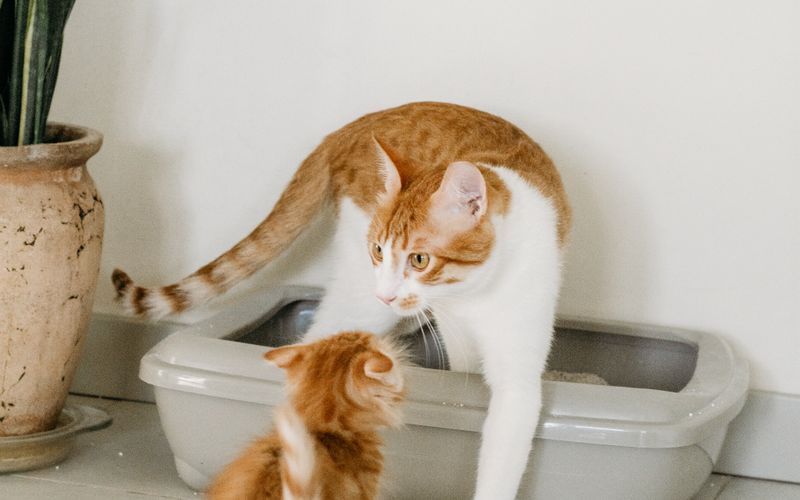
Bringing home a new kitten means choosing a litter — and if you already use biodegradable cassava, tofu, corn, or crystal silica litter for adult cats, you might wonder if a young kitten can share the same box. The short veterinary answer: under 8 to 10 weeks of age, kittens frequently taste and swallow litter granules while learning to groom their paws, which makes certain litters dangerous and others ideal.
Here is the complete age-by-age breakdown of whether kittens can safely use cassava (manioc), tofu, pine, silica crystals, or clumping bentonite clay — plus when a growing kitten is finally heavy enough to use an automatic self-cleaning litter box.
Why Kitten Litter Choice Is a Medical Safety Issue
Between 3 and 8 weeks old, kittens go through an oral exploration phase similar to human toddlers. They step in wet litter, lick their paws, and occasionally eat a mouthful of granules out of curiosity (or due to anemia/pica). What happens next depends entirely on what that granule is made of:
| Litter Type | Safe for Kittens Under 8 Weeks? | Safe for Kittens 10–12+ Weeks? | Why / Key Safety Note |
|---|---|---|---|
| 1. Non-Clumping Paper / Pine Pellets | ✅ Best Choice (3–8 wks) | ✅ Yes | Digestively harmless if nibbled; zero dust for tiny lungs |
| 2. Cassava (Manioc) / Corn / Wheat | ⚠️ Supervise (6–8 wks) | ✅ Excellent (8+ wks) | 100% food-grade plant starch; digestible in small amounts, zero silica dust |
| 3. Tofu / Pea Fiber Pellets | ⚠️ Supervise (6–8 wks) | ✅ Excellent (8+ wks) | Large pellets don’t stick between tiny toe beans; low tracking |
| 4. Silica Gel Crystals | ❌ Avoid | ⚠️ Wait until 4+ months | Sharp crystals hurt sensitive kitten paw pads; dehydrating if swallowed in quantity |
| 5. Sodium Bentonite Clumping Clay | ❌ Dangerous (< 8 wks) | ✅ Safe after 10–12 wks | Expands up to 15x on contact with moisture; can cause intestinal blockage if eaten |
How Much Litter & Scooping Time Will You Save Per Year?
Precision sifting preserves clean litter instead of tossing half-used clumps. Calculate your household's annual savings:
Can Kittens Use Cassava or Tofu Litter?
Yes — starting around 8 weeks of age, natural plant-based litters made from cassava (manioc root), corn, or pea-fiber tofu are among the safest clumping litters you can buy for a kitten.
Unlike sodium bentonite clay, which cements into a rock-hard mass inside a kitten’s stomach if ingested, food-grade cassava starch and tofu fibers break down with stomach acid and digestive enzymes. However, keep two practical rules in mind:
- Watch the first 48 hours: Because tofu and corn litters sometimes smell faintly sweet or nutty, some newly weaned kittens try to snack on them on day one. If your 6-to-8-week-old kitten treats tofu pellets like kibble, use plain paper or pine pellets for two more weeks until they outgrow litter-eating.
- Fine cassava vs. tofu pellets for tiny paws: Cassava litter has a soft, beach-sand texture that kittens instinctively love to dig in. Tofu pellets are larger (2–3 mm cylinders), which keeps litter from sticking to damp kitten paws.
Why You Should Skip Silica Crystal Litter for Young Kittens
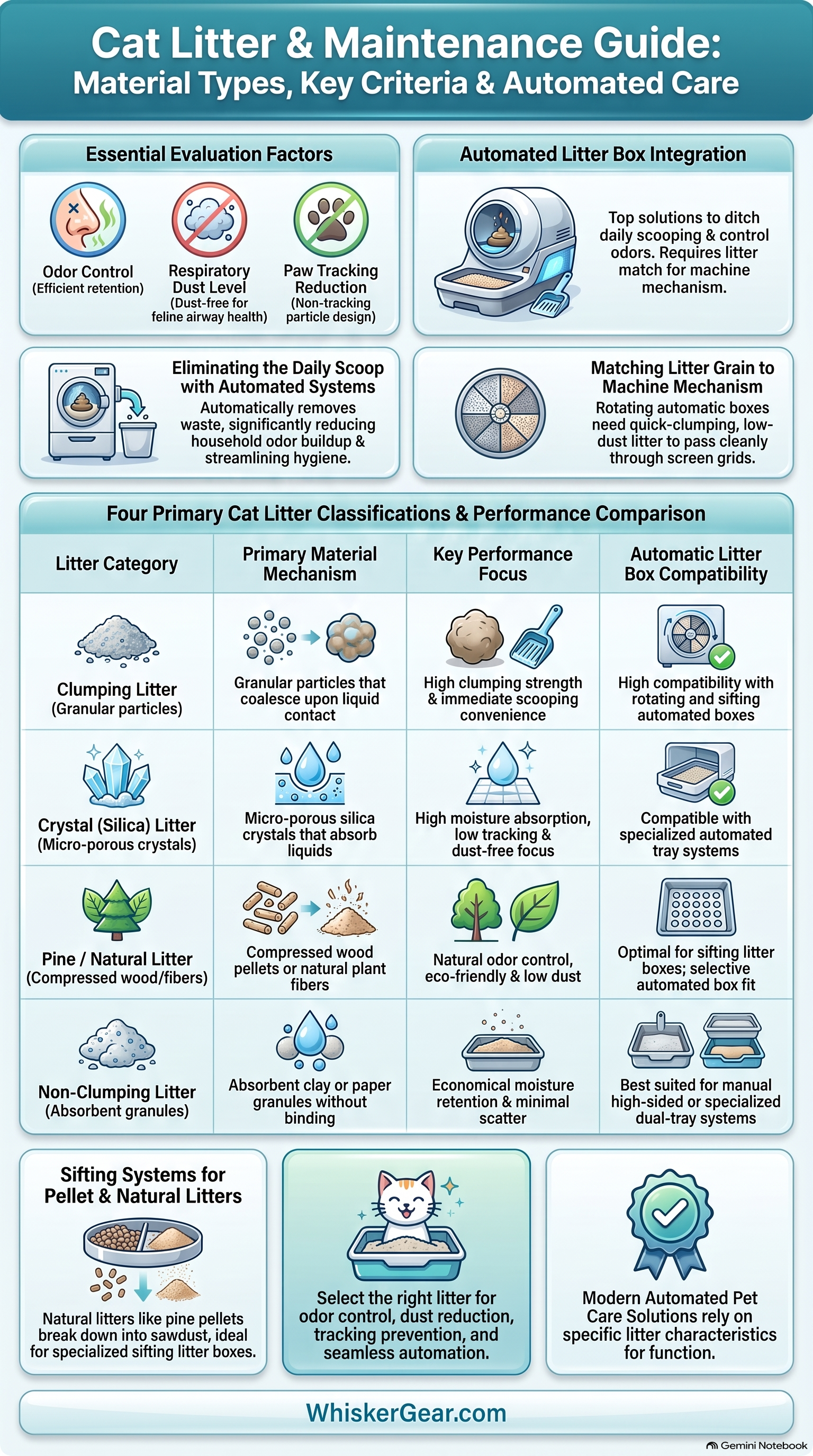
While amorphous silica gel crystals are non-toxic chemically, veterinarians generally advise waiting until your kitten is at least 4 months old before using crystal litter, for three reasons:
- Tender paw pads: Standard jagged silica crystals feel like walking on gravel to a 2-pound kitten, which can cause them to avoid the box and pee on soft bath mats instead.
- Rapid moisture absorption: If a curious kitten swallows several crystals, the desiccant beads aggressively absorb gastrointestinal moisture.
- No urine-clump feedback: With clumping cassava or tofu, you can see the exact size of your kitten’s pee clumps every day — an essential health check after vaccination or deworming.
When Can a Kitten Use an Automatic Self-Cleaning Litter Box?
If you own or plan to buy one of our top-rated automatic cat litter boxes, follow the golden safety rule: keep the automatic box UNPLUGGED (manual mode) until your kitten weighs at least 3.0 to 3.5 lbs (1.5 kg) — usually around 12 to 16 weeks of age.
Gravity weight sensors in automated boxes are calibrated to detect cats above 2.5–3.3 lbs. Leaving the machine unplugged lets your kitten use it as a normal box while they grow, and once they cross 3.5 lbs, you can turn on automatic sifting safely.
Frequently asked questions
At what age can a kitten switch to normal clumping litter?
Most kittens can safely transition to clumping plant-based litter (cassava, corn, or tofu) at 8 to 10 weeks old, and to standard sodium bentonite clumping clay at 12 weeks (3 months) old, once they have completely stopped mouthing or tasting litter granules.
Why is my kitten eating litter?
In kittens under 8 weeks old, nibbling a few granules is usually normal exploratory behavior. However, if an older kitten (10+ weeks) actively eats litter, schedule a vet visit immediately: eating non-food items (pica) is a classic warning sign of feline anemia (often from fleas or intestinal parasites) or nutritional deficiency.
Does cassava litter work in automatic litter boxes?
Yes! Fine-granule cassava litter and crushed tofu/corn clumping litters form tight, fast clumps that pass smoothly through the sifting grates of open-top and drum-style automatic litter boxes without creating clay dust on the optical sensors.
Get the Cat Parent Safety & Gear Checklist (Free)
Join 1,000+ cat parents: get instant access to our 1-page Home Safety, Litter Ratio & Emergency Vet Checklist — plus one short email when we publish a new guide.