
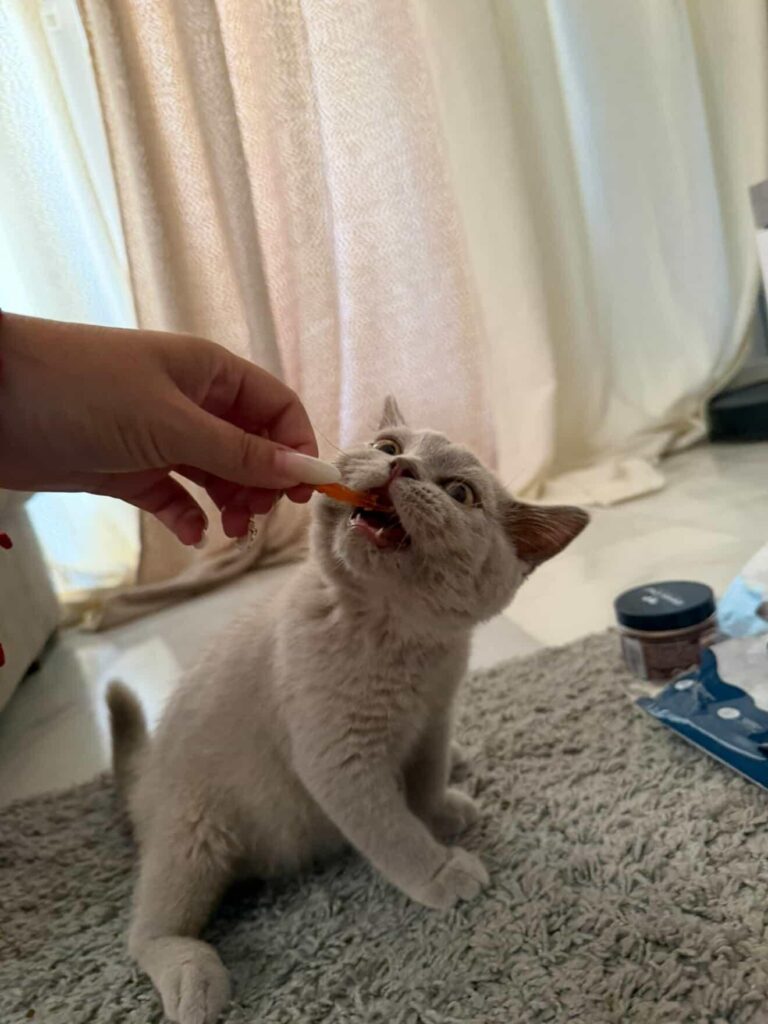
Some kittens eat first and ask questions later. Bruno asks questions first.
Fast facts: British Shorthair kitten · food-obsessed · inspects every new treat like a critic before eating · convinced he’s always starving, regardless of the evidence.
According to his owner (@sirbruno.cat on Instagram), this British Shorthair kitten has “a big personality” built almost entirely around food. He’s obsessed with it — and dramatic about it. Bruno can finish an entire meal and, minutes later, act like he hasn’t eaten in days. No bowl is ever really empty in his mind.
The food critic ritual
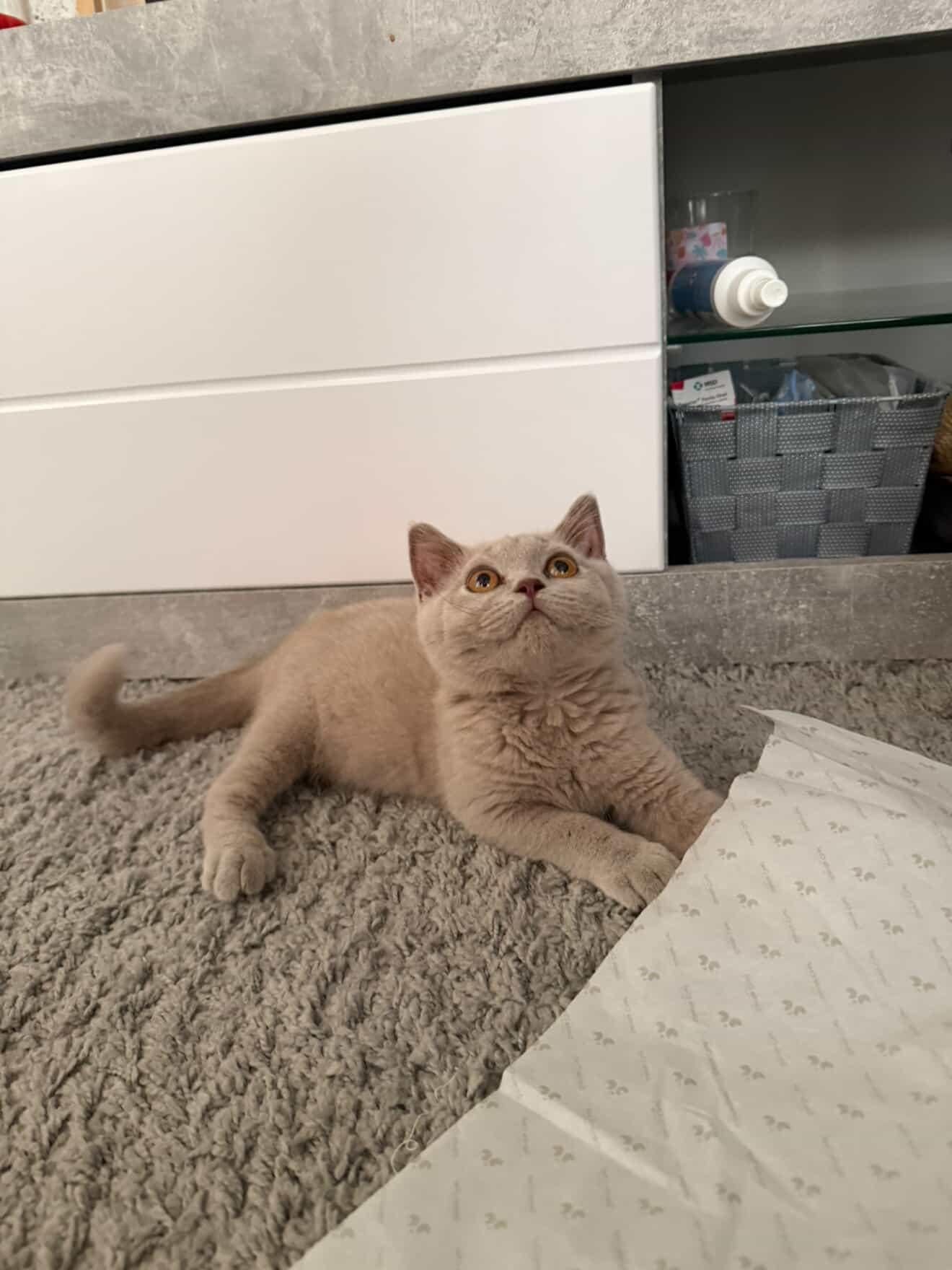
His funniest habit says it all: every time he gets a new treat, Bruno doesn’t just dive in. He sniffs it seriously, thoroughly, like he’s about to write it up for a review. Only once he’s satisfied does he give the green light — and once he does, there’s no stopping him. It’s less “hungry kitten” and more “professional taste-tester who takes the job very seriously.”
It’s the kind of habit that turns snack time into a small performance every single time, and honestly, we respect the standards.
Why food-motivated kittens act like this
Cats lean on smell far more than humans do when deciding whether something is worth eating — a cat’s nose has roughly 14 times more scent receptors than ours. Sniffing a new treat before committing isn’t pickiness so much as basic due diligence: it’s how a cat checks freshness, texture cues, and whether something is actually food before risking a bite. Kittens in particular tend to be food-driven simply because they’re growing fast and building the habits (and food preferences) that often stick for life.
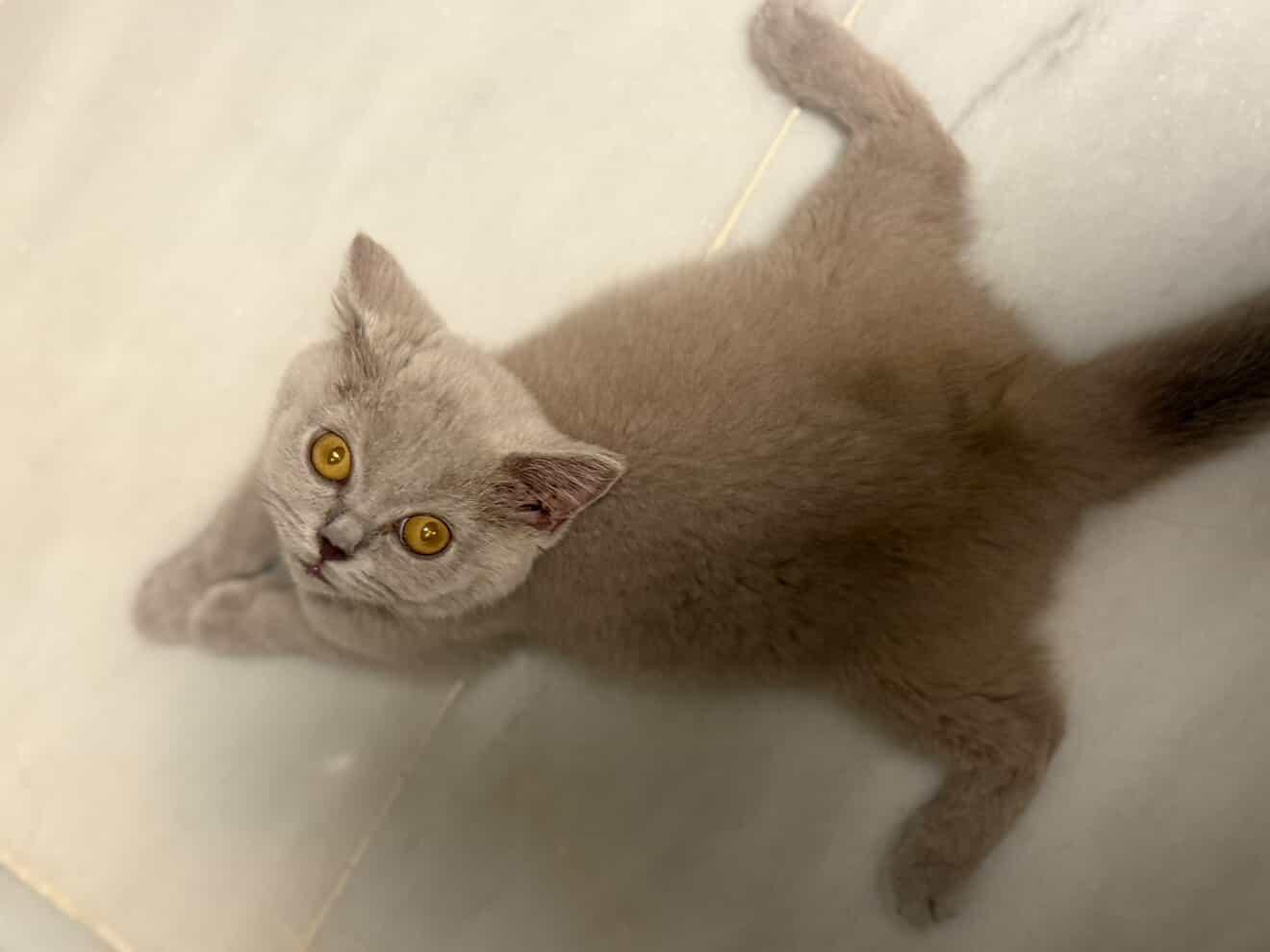
Is it normal to act starving right after a full meal?
It’s extremely common, especially in kittens and especially in food-motivated breeds. Begging behavior right after eating is usually more about habit and attention than actual hunger — though it’s worth tracking portion sizes as a kitten grows, since “acts hungry” and “is actually hungry” aren’t always the same thing. We go deeper on portioning in how much you should feed a cat per day, and on the flip side, a kitten that eats too fast is its own issue — covered in what to do when a cat eats too fast and throws up.
Frequently asked questions
Why do cats sniff their food before eating?
Smell is their primary way of judging whether something is safe and appetizing. It’s instinctive, not a sign of a picky or difficult cat.
How much should a British Shorthair kitten eat?
It depends on age and weight, but kittens generally need more frequent, smaller meals than adult cats to support fast growth. A vet or the feeding guide on the food packaging is the most reliable starting point.
Is constant “I’m starving” behavior normal in kittens?
Usually yes, especially in playful, food-motivated kittens. It’s worth monitoring if it comes with actual weight loss or seems compulsive, but the theatrical version most kittens perform is just personality.
Why we’re sharing his story
At WhiskerGear, we spend most of our time thinking about what cats eat, drink, and sleep on — so a kitten with actual opinions about his food felt like a perfect fit. Bruno is a reminder that personality shows up in the smallest routines, even something as simple as inspecting a treat before committing to it.
Thank you to @sirbruno.cat for sharing Bruno’s story and photos with us.
More real cat stories from our community: Tilleh and Minnosh.
Have a cat with a story worth telling? We’re featuring real cats — no staging, no sponsorship — from our community. Send us a DM on Instagram to be featured on the blog.