
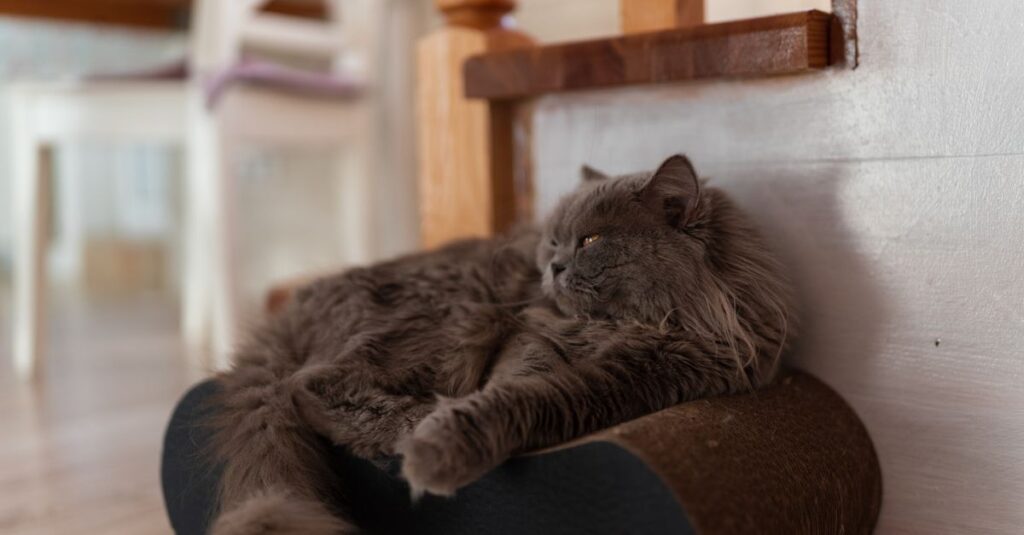
A bored cat doesn’t just sit quietly waiting for you to get home — it knocks over the plant, meows nonstop at 3am, eats too fast, or licks itself bald in one spot. It’s easy to mistake boredom for “attitude” or even a health issue, but the pattern is usually recognizable.
Signs your cat is bored
- “Pointless” destruction: scratching things that aren’t a scratcher, knocking objects over just to watch them fall.
- Excessive meowing with no clear reason (hunger/pain already ruled out), especially around the time you usually get home.
- Eating too fast or grazing all day — eating becomes the only available “activity.”
- Over-grooming to the point of bald patches (more common in anxious/bored cats left alone for long stretches).
- Sleeping noticeably more than usual (adult cats already sleep a lot, but a bored cat sleeps from lack of stimulation, not real tiredness).
Why indoor cats are especially prone to this
An outdoor cat’s day is naturally full of small jobs: patrolling territory, watching for other animals, hunting bugs and birds, finding a new sunny or shady spot. An indoor-only cat — which is safer overall and the right call for most households — doesn’t get any of that for free. Everything has to be manufactured: the hunting has to come from a toy, the territory-watching from a window perch, the novelty from you rotating what’s available. Boredom in indoor cats isn’t a character flaw or a sign you’re doing something wrong; it’s the predictable result of removing a lot of a cat’s natural workload without replacing it with something else. That’s also why the signs above tend to show up more in single-cat, indoor-only households than in cats with outdoor access or a feline housemate to wrestle with.
What to do about it
1. Stimulate before you leave
10 minutes of active play (wand, handheld laser) before you head out genuinely tires the cat, and it tends to sleep through most of the alone time instead of “looking for something to do.”
2. Automatic toy during the empty hours
A toy with unpredictable movement, running mid-way through the time they’re alone, breaks up the boredom without you needing to be there.
3. Window access
A cat who can watch the street or yard (birds, movement) gets a lot of mental stimulation just from looking. A perch near the window helps a lot and costs almost nothing.
4. Food that requires effort
Swapping a regular bowl for something that makes them “work” for food (even a simple version) stretches out engagement time and reduces anxious fast-eating.
Building a simple enrichment routine that sticks
The households that actually solve boredom long-term usually aren’t the ones that buy the most toys — they’re the ones that build a small, repeatable routine. A workable version looks something like: a short active play session in the morning before you leave, an automatic toy or puzzle feeder running sometime mid-day, a rotation of 2-3 toys swapped out weekly so nothing goes stale, and a second short play session in the evening when you’re home. None of these individual pieces has to be elaborate — the consistency matters more than the sophistication of any one item. It also helps to notice which part of the day your cat seems most restless (many cats spike in energy at dawn and dusk, which lines up with natural hunting hours) and aim your effort at that window rather than spreading it evenly across the day.
When to see a vet
If over-grooming has already caused a visible wound or bald patch, or the meowing came with a change in appetite or litter box habits, rule out a medical cause before assuming it’s just boredom.
FAQ
How much playtime does a bored cat actually need?
Two 10-15 minute active sessions a day (one before you leave, one when you’re back) covers most cats’ baseline need. A cat showing several boredom signs at once may need more frequent, shorter bursts rather than one longer session, since attention span for a single toy is often just a few minutes.
Can getting a second cat fix boredom?
Sometimes, but it’s not guaranteed — a well-matched second cat gives a bored cat a playmate and rival to watch, but a mismatched pairing adds stress instead of solving anything. Enrichment changes are a lower-risk first step before adding another animal to the household.