
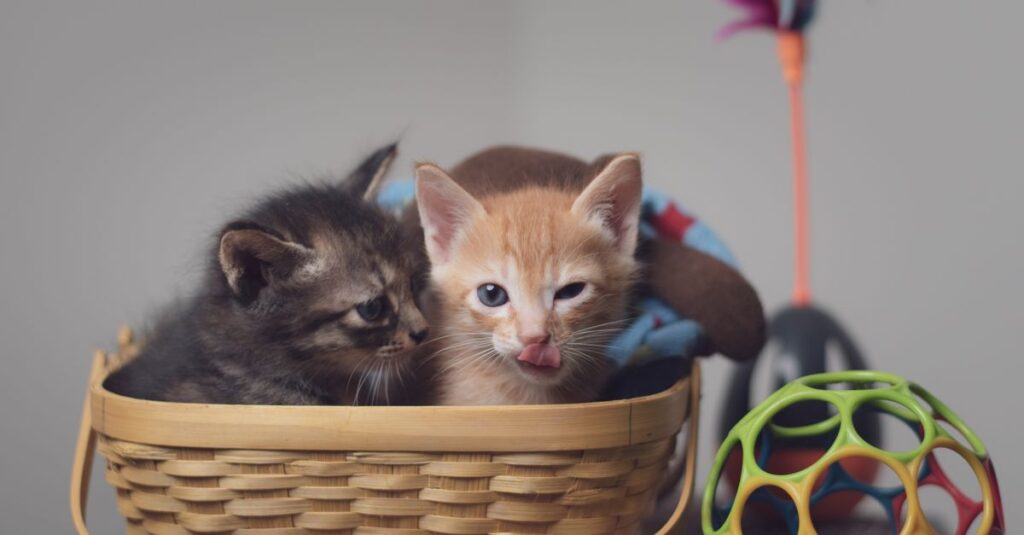
Some people buy five “premium” toys and the cat ignores all of them, preferring a bottle cap instead. That’s not bad luck — every cat has a preferred “hunting style,” and most toys on the market are built to appeal to the widest audience, not your specific cat. You can figure out the style in a few minutes of observation.
1. Watch what they already chase around the house
Do they run after a paper ball rolling on the floor? Bat at something dangling? Prefer to hide and “ambush” your foot as you walk by? That already tells you the type: ground movement (ball), aerial movement (feather/wand), or ambush (hide-and-seek toys, tunnels).
2. Age matters more than people think
Kittens (under 1 year) will burn energy on almost anything that moves fast — prioritize safety (no loose small parts) over sophistication. Adult cats get picky, and that’s where unpredictable movement (that doesn’t repeat a pattern) really makes a difference. Senior cats usually prefer slower toys with less demand for jumping or sprinting — a feather dragged low along the floor works better than a fast laser.
3. Automatic vs. manual: what changes
Automatic solves the “cat home alone” problem. Manual (wand, handheld laser) builds a bond — the cat associates play with YOU, not just the object. Ideally you have both: automatic for the empty hours, manual for at least 10 minutes a day together.
4. Material and safety
Avoid toys with small detachable parts (glued-on plastic eyes, loose bells) — cats swallow them. Prefer feathers/strings that are sewn on, not glued. If it’s battery-powered, check that the compartment is screw-sealed, not just a snap-fit — a curious cat will pry it open.
5. Rotation matters more than quantity
Leaving 10 toys scattered on the floor all the time makes the cat go “blind” to them (they become part of the scenery). Store most of them and keep only 2-3 accessible at a time, rotating weekly — this re-triggers interest almost like a brand-new toy, for free.
How to test a new toy without wasting money
Before buying multiples or committing to an expensive automatic model, run a cheap test first: a $3 wand toy or a simple crinkle ball tells you a lot about which hunting style actually excites your cat. Watch for the tells that mean real engagement rather than polite curiosity — dilated pupils, a low crouch with the back end wiggling before a pounce, or a cat that keeps coming back to the toy on its own after you stop moving it. A cat that sniffs a new toy once and walks away isn’t necessarily rejecting the category forever; try again on a different day, since mood, hunger, and time of day all affect how playful a cat feels. If a cat consistently ignores an entire category (say, every laser you’ve tried) after several honest attempts, that’s a real signal to stop buying that type and put the budget toward something else.
Breed and personality tendencies to keep in mind
Individual personality matters more than breed, but a few general tendencies are worth knowing before you shop. Highly active, vocal breeds often associated with strong prey drive — Bengals, Abyssinians, Siamese — tend to engage fast with almost any moving toy and burn through novelty quickly, so they usually need more toy rotation, not less. Calmer, more laid-back breeds sometimes labeled “lap cats” can take longer to warm up to a new toy and often prefer toys they can catch and hold rather than ones that stay just out of reach forever, like a laser. None of this is a hard rule — plenty of easygoing breeds turn out to be little hunting machines, and plenty of “high energy” breeds would rather nap. Treat breed tendencies as a starting guess, not a substitute for watching your actual cat.
What Loua and Jinu actually play with
We asked the owner of two Ragdoll kittens, @loua_jinu, what actually works at home.
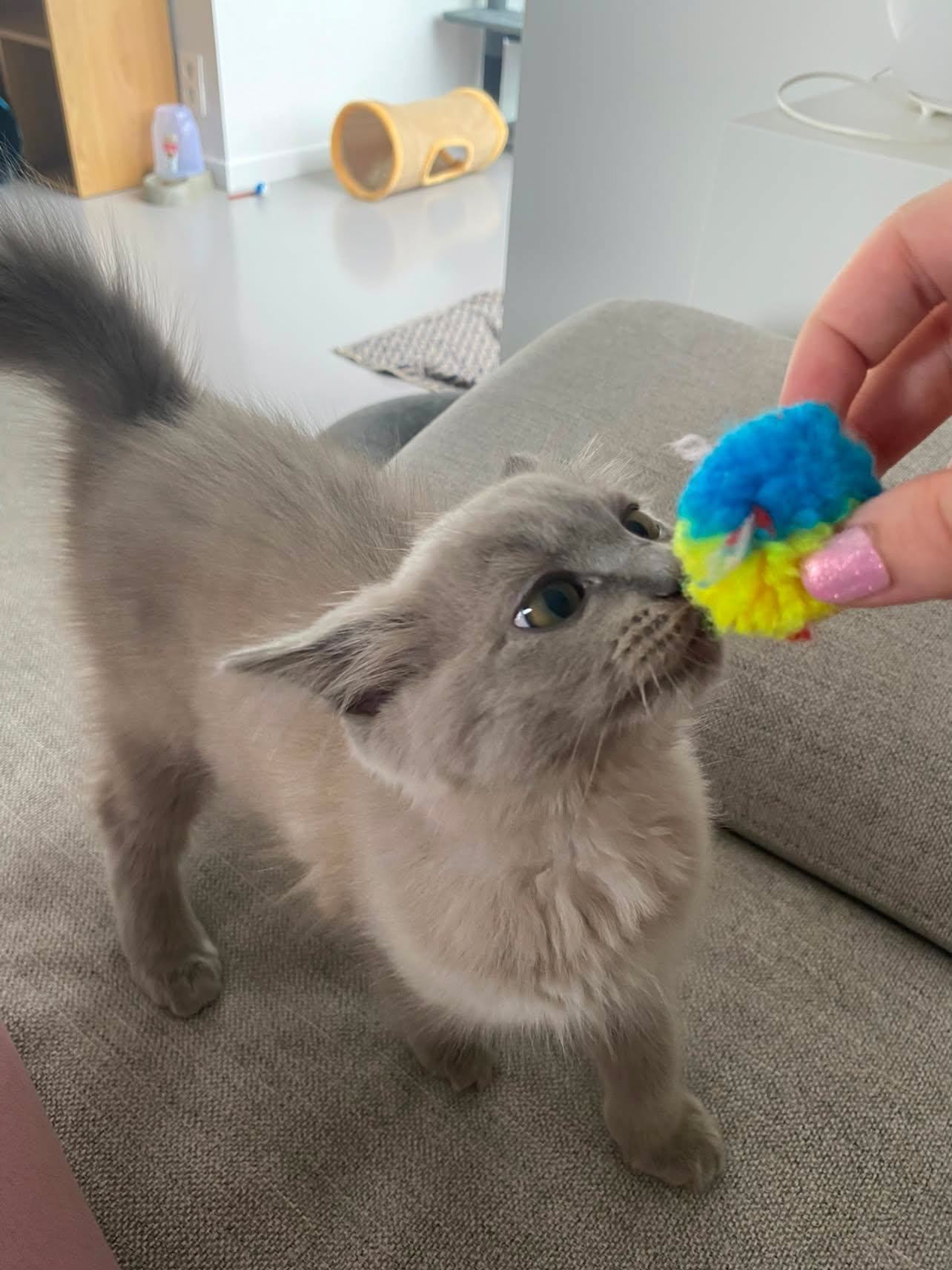
What they love: a toy hanging from the ceiling that sways on its own; a yarn ball — Loua fetches it and brings it back; a feather wand, which they treat like real prey; and a toy that bounces on the floor.
What they ignore: the scratcher-bed combo, even though it was bought with good reviews — sometimes a cat just isn’t interested, even in the “right” product on paper. And a ball with a bell inside, which they find too noisy.
FAQ
Is it normal for a cat to not like any toys?
Some cats genuinely have a lower prey drive, especially older cats or ones that never hunted for real. Try fresh catnip (not old powder) before giving up — it changes the reaction quite a bit in most cases.
Do toys with sound scare cats?
They can, especially with a more skittish cat. If it’s the first time with a sound-making toy, let them investigate it powered off first.