
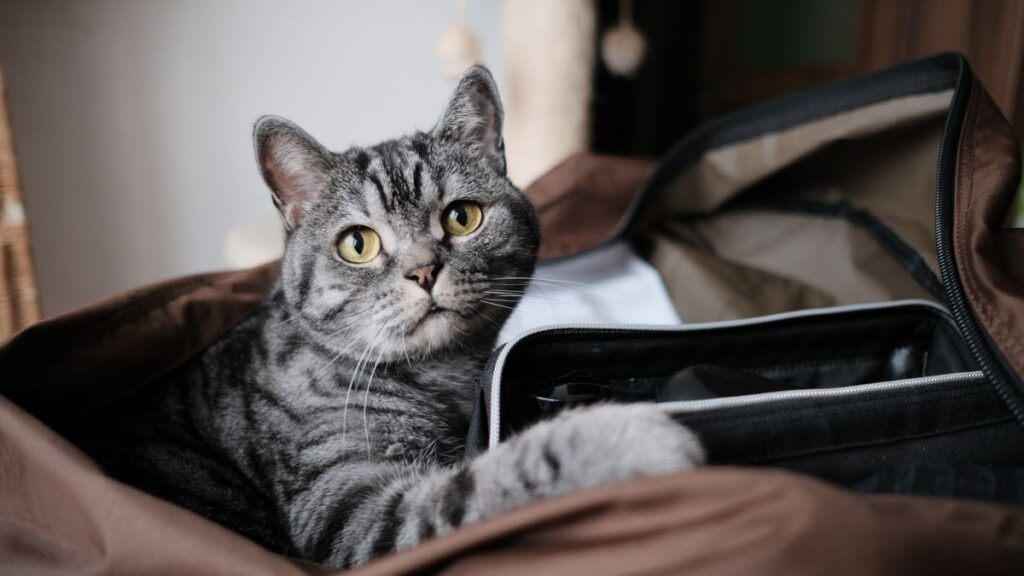
Every cat owner knows the scene: the carrier comes out, the cat evaporates. And when you finally find them under the bed, getting them through that little door feels like folding a spring. The good news is that this fight is almost entirely preventable, and fixing it has less to do with technique on the day and more to do with what the carrier means to your cat the rest of the year.
The real problem: the carrier only appears on bad days
Most carriers live in a closet 363 days a year and come out only for the vet. Your cat has done the math: carrier equals needles. No grip technique beats that association. The single most effective fix is boring: leave the carrier out permanently, door open, soft blanket inside, in a room your cat likes. Toss a treat in occasionally. Within a few weeks the scary box becomes furniture, and some cats start napping in it on their own.
On the day: calm beats speed
Close the door of the room before you bring out the carrier, calmly, long before you need to leave. Cats read urgency in your body. If your carrier has a top opening, lower the cat in rear-first so it does not see the entrance approaching. With a front-only door, stand the carrier on its end, door facing up, and lower the cat in gently the same way.
The towel trick for difficult cats
For a cat that panics, a thin towel wrapped snugly around the body, burrito style, legs in, calms most cats within seconds and protects both of you. Lower the wrapped cat into a top-loading carrier and unwrap by pulling the towel free once inside. It sounds harsh and is the opposite: pressure is calming, and the whole thing takes ten seconds instead of a ten-minute chase.
What not to do
Do not chase the cat around the house first, adrenaline makes everything harder. Do not shove a cat face-first through a front door while it braces. Do not dump the cat out at the vet by tilting the carrier, open the top and let the vet work, or lift the cat out gently. And do not punish or scold, fear is the whole problem, adding more never helps.
Make the trip itself less scary
Cover the carrier with a light towel in the car, darkness calms cats. Secure it with the seat belt on the back seat so it does not slide. Talk normally, play nothing loud. A synthetic pheromone spray (like the ones sold for travel calm) sprayed into the carrier 15 minutes before, not with the cat inside, helps some cats noticeably.
Building the association ahead of a known trip date
If you have a vet visit or a trip booked days out, you can do more than just leave the carrier open. Feed a few meals or favorite treats right next to the carrier, then just inside the open door, then fully inside over several days, moving at whatever pace your cat tolerates without backing away. Some owners add a worn t-shirt or a blanket that already smells like the cat’s usual sleeping spot. The goal is for the carrier to accumulate a string of unremarkable, even pleasant, moments before it needs to do its actual job. A cat that has eaten twenty meals inside a carrier associates it with dinner, not just with the one day a year it means the vet.
Why some cats never fully relax about it, and what that means
Not every cat becomes a cat that walks into its carrier on command, and that is a realistic expectation to hold, not a personal failure. Some cats are simply more anxious by temperament, and for those cats the towel-wrap method and a calm, quick loading routine matter more than long-term desensitization. If your cat’s fear seems disproportionate, extreme drooling, spraying, or prolonged panting well before the carrier even appears, it is worth mentioning to your vet. Some cats benefit from a vet-prescribed calming option for travel days specifically, used alongside the routine described here rather than instead of it.
If the fight is also a gear problem, a carrier with a wide top opening changes everything. We compare top-loading and other designs in our guide to the best cat carriers.
Frequently asked questions
How long does carrier training take?
Leaving the carrier out with treats, most cats relax around it in two to four weeks. Skittish cats take longer. Start well before you need the trip, the night before does not work.
Should I feed my cat before a trip?
A light meal three or four hours before, not right before. A very full stomach plus a nervous cat plus a moving car is a predictable mess.
My cat hides the moment I get near the closet where the carrier lives. What now?
Move the carrier out of that closet entirely and into a room your cat spends time in relaxed, with the door left open. Cats build strong associations with specific locations, so a carrier that only ever emerges from one dreaded spot keeps the old association alive no matter how calm you act.