
Dental disease is one of the most common health issues in adult cats, and it’s also one of the easiest to overlook, because a cat with a sore mouth doesn’t usually stop eating altogether. They just eat a little differently, chew on one side, or go quiet about it entirely. A home dental routine won’t replace professional veterinary cleanings when they’re needed, but brushing, dental-friendly treats, and water additives can meaningfully slow down plaque buildup between checkups.
This guide covers why feline dental health matters, how to actually brush a cat’s teeth (or get close to it), what enzymatic toothpaste is and why human toothpaste is off the table, water additives, dental treats, and the warning signs that mean it’s time to see a vet rather than try another home product.
Why dental health matters for cats
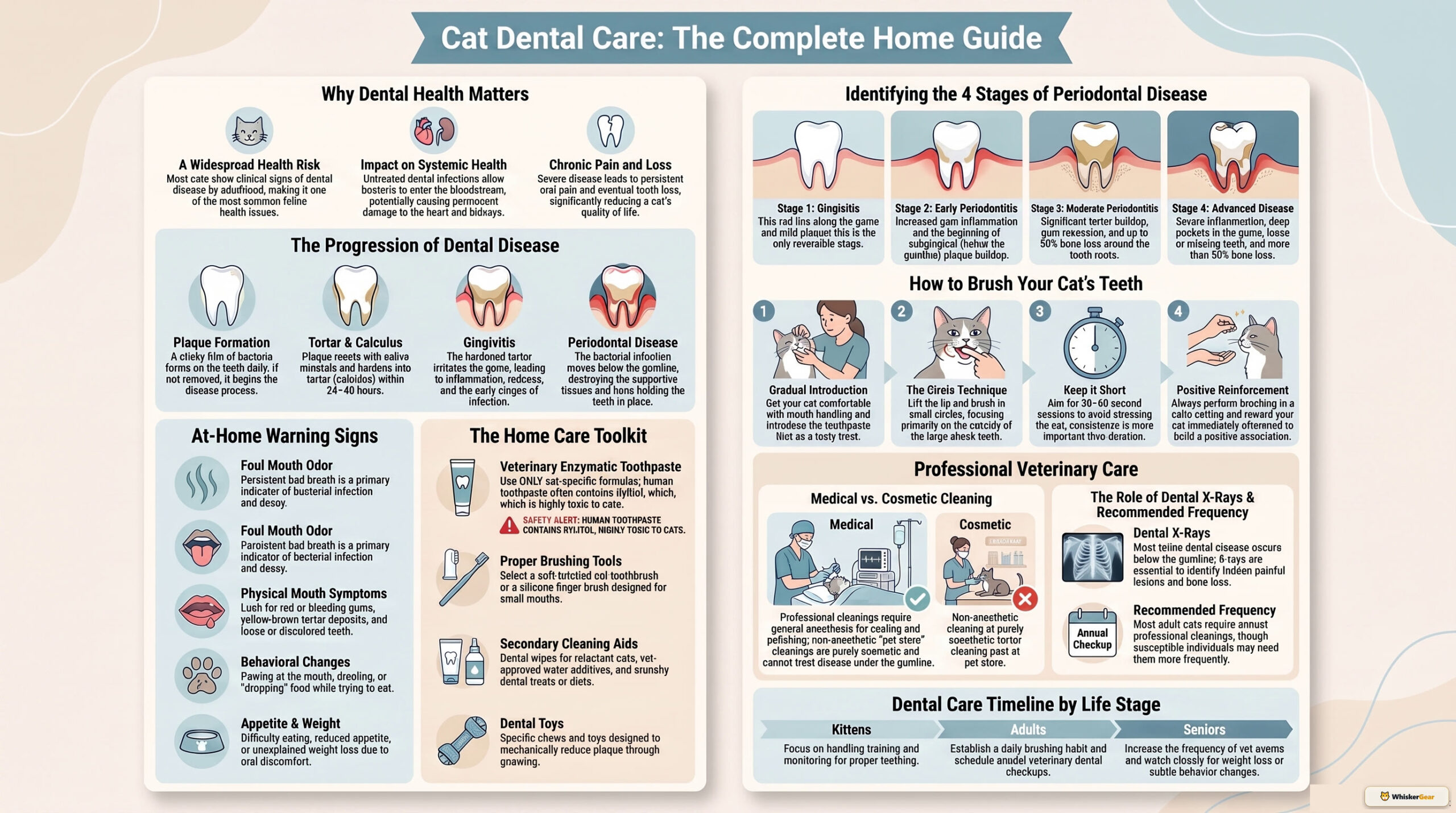
Plaque forms on a cat’s teeth constantly, the same way it does on ours. Left alone, it hardens into tartar within days, and tartar buildup along the gumline leads to gingivitis, the inflammation that makes gums red, swollen, and prone to bleeding. Left unmanaged over time, this can progress to more serious periodontal disease, tooth resorption, and chronic pain, which is part of why dental disease is considered one of the most common health issues in cats over a few years old. A consistent home routine won’t undo damage that’s already there, but it does slow how fast new plaque turns into tartar.
What plaque, tartar, and gingivitis actually look like
Plaque is the soft, almost invisible film that builds up daily. Tartar is the hard, yellow-brown crust it turns into once it mineralizes, usually most visible along the gumline on the back teeth. Gingivitis shows up as a red or inflamed line right where the tooth meets the gum, sometimes with mild bleeding when your cat eats or when you touch the area. Bad breath that’s more than a faint “cat food smell” is often the first thing owners notice, and it’s worth taking seriously rather than writing off as normal.
How to brush a cat’s teeth
Most cats do not enjoy having their teeth brushed, at least not right away, so the realistic goal is a slow introduction rather than a five-minute brushing session on day one. Start by letting your cat lick a small amount of enzymatic toothpaste off your finger for a few days, with no brushing at all, so the taste and the process become familiar. Next, run a finger or a soft finger-brush gently along the outside of the teeth and gums for a few seconds. Only once your cat tolerates that should you move to an actual soft-bristled pet toothbrush, focusing on the outer surfaces of the teeth (that’s where most plaque builds up) rather than fighting to get inside the mouth. Keep sessions short, always end on a calm note, and don’t force it if your cat is clearly distressed. Some cats never fully accept brushing, and that’s fine. It’s one tool among several, not the only option.
Enzymatic toothpaste (and why human toothpaste is dangerous)
Enzymatic pet toothpastes use enzyme systems that work with your cat’s saliva to help break down plaque, rather than relying on foaming or abrasive scrubbing the way human toothpaste does. They’re formulated to be safe if swallowed, which matters a lot since cats can’t spit and rinse.
Never use human toothpaste on a cat. Many contain fluoride at levels that are unsafe for cats to ingest, and some contain xylitol, an artificial sweetener that is toxic to pets even in small amounts. Always use a product made specifically for cats or for cats and dogs together.
Water additives and dental treats
Water additives are liquids added to your cat’s drinking water that are designed to help reduce plaque and freshen breath with essentially zero effort on your cat’s part, which makes them a reasonable option for cats that won’t tolerate any brushing at all. They tend to have a milder effect than brushing, so they work best as one part of a routine rather than a full replacement for it.
Dental treats and kibble use texture, size, and shape to create mild mechanical friction against the tooth surface as your cat chews, which can help reduce plaque on the teeth actually being used to chew. They’re a supplement to dental care, not a substitute for it, and treats still count toward daily calories, so factor them into your cat’s overall diet rather than adding them on top of normal meals.
If your cat shows bad breath beyond the usual, bleeding or noticeably red gums, drooling, pawing at the mouth, dropping food while eating, or a sudden drop in appetite, talk to your vet before starting any new dental product. These can be signs of dental disease that already needs professional treatment, and a home routine works best as prevention and maintenance, not as a fix for a problem that’s already there.
FAQ
How often should I brush my cat’s teeth?
Daily is ideal, but even two to three times a week makes a real difference compared to no brushing at all. Consistency matters more than perfection.
Is it too late to start a dental routine with an older cat?
No, though an older cat with existing tartar or gum inflammation should see a vet first to check whether a professional cleaning is needed before starting a home routine, so you’re not just brushing over an existing problem.
Can I use baking soda or coconut oil instead of pet toothpaste?
It’s best to stick with a product made and tested for cats. Baking soda can upset a cat’s stomach if swallowed in any quantity, and homemade alternatives don’t have the enzyme systems that actually help break down plaque.
My cat won’t let me near its mouth at all. What can I do instead?
Water additives and dental treats are reasonable fallback options for cats that won’t tolerate brushing. They’re not as effective as brushing but are far better than nothing, and you can keep trying gentle, gradual finger introductions over time.
How do I know if my cat needs a professional dental cleaning?
Visible tartar, red or bleeding gums, persistent bad breath, or any of the warning signs above are reasons to have your vet examine your cat’s mouth. Only a vet can tell you whether a professional cleaning under anesthesia is needed.