
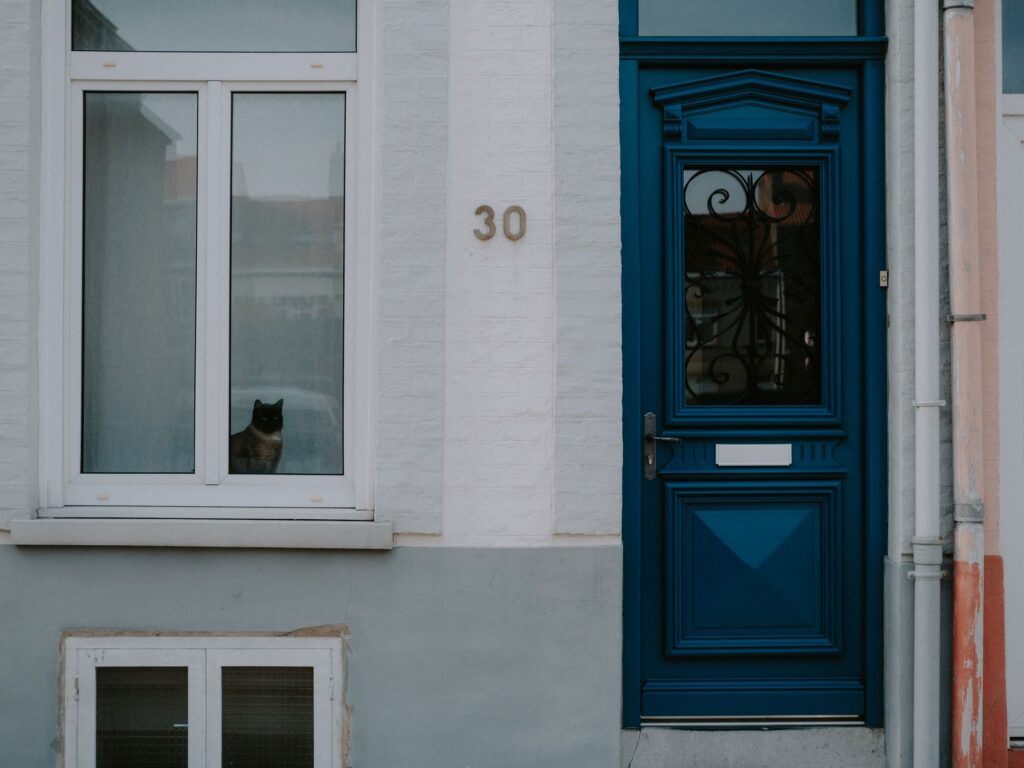
A standard cat flap has one big flaw: it opens for any cat willing to push through it. If you live somewhere with a lot of outdoor or neighborhood cats, that can mean a rival cat wandering into your kitchen, eating your cat’s food, spraying, or starting a fight indoors. A microchip pet door solves this by reading the same ISO microchip your vet already implanted and only unlocking for the cat, or cats, registered to it. This guide covers how these doors actually work, what installation involves, and the features worth paying attention to before buying one.
How a microchip pet door actually works
Every microchip implanted by a vet broadcasts a unique ID number when it passes close to a compatible RFID reader, which is the same basic technology a vet clinic or shelter uses to scan a lost cat. A microchip pet door has that reader built into the frame. When your cat approaches, the door reads the chip number, checks it against a list of authorized pets stored in the door’s memory, and unlocks only if there’s a match. You don’t need to buy or implant a new chip, and you don’t need to attach anything to the collar, since the door reads the chip that’s already under the skin between your cat’s shoulder blades.
Most doors can also be set to work with a separate RFID collar tag instead of, or alongside, the microchip, which is useful for a foster cat or a pet that hasn’t been chipped yet. Registering a pet is usually done by putting the door into a learning mode and letting the cat walk through it once so the reader captures the chip ID.
Installation basics
Microchip pet doors are designed to fit into a standard exterior door, a glass panel, or a wall, depending on the installation kit used. Fitting one into an existing wood or uPVC door is usually the simplest option and mainly involves cutting an opening to the flap’s template size and securing the frame on both sides. Installing into glass requires professional cutting and is best left to a glazier, and installing through a wall needs a tunnel kit to bridge the wall’s thickness. None of these installs require electrical wiring, since the doors run on batteries, but it’s worth measuring your door’s thickness against the product’s supported range before buying, since very thick doors sometimes need an extension tunnel sold separately.
Curfew and timer features
Beyond just keeping other cats out, most microchip doors let you set a curfew, a scheduled window where the door locks completely regardless of which pet is trying to use it. This is commonly used to keep a cat inside overnight, when outdoor cats are more likely to be hit by cars or get into fights with wildlife or other cats. Curfew times are typically programmed directly on the door itself using onboard buttons, though some higher-end connected models let you set and adjust the schedule from a phone app and see a log of when your cat came and went.
DualScan and directional control
Some microchip doors, like the SureFlap DualScan, read the chip on both entry and exit rather than just on the way in. That extra step lets you set independent rules for each direction, for example letting a cat in freely at any time while requiring it to be indoors before a set curfew hour, or blocking exit entirely for an indoor-only cat while still letting other registered pets in the household come and go. It’s a useful upgrade if you’re managing more than one cat with different access needs, though the basic in-only version covers the core problem of keeping strange cats out for most households.
Who actually needs one
A microchip door makes the most sense if you already have a regular cat flap and know, or suspect, that other cats in the neighborhood are using it. Scratched food bowls, unexplained spraying near the door, or a resident cat suddenly avoiding its own cat flap are common signs of an uninvited visitor. It’s a less urgent purchase for an indoor-only cat with no flap access at all, or for a household where a plain flap has never caused a problem, since the main benefit over a standard flap is exclusion, not convenience.
Battery life and maintenance
Most microchip doors run on standard alkaline batteries rather than being hardwired, with manufacturers commonly rating battery life around 12 months under normal use, though cold weather and a busy multi-cat household will drain them faster. A low-battery indicator light is standard on most models so you’re not caught off guard by a door that stops working. Aside from battery swaps, maintenance is minimal: keeping the reader area free of dirt and giving the flap’s hinge an occasional check is usually all that’s needed.
FAQ
Does my cat need a new microchip for this to work?
No. Microchip pet doors are built to read the standard ISO microchip your vet already implants during a routine visit, so as long as your cat is chipped, there’s nothing new to install in the cat itself.
Can a microchip door work for more than one cat?
Yes. Most models can store multiple authorized pets, commonly up to around 32, so a multi-cat household can register each cat’s chip and still keep unregistered neighborhood cats out.
What happens if the battery dies?
Behavior varies by model, but many microchip doors default to a locked or manual-only state when the battery runs out, which is why most include a low-battery warning light well before it happens.
Will this keep my cat from going outside at all?
Only if you want it to. The curfew feature lets you fully lock the door on a schedule, but outside of curfew hours your registered cat can pass freely in both directions, the same as a normal cat flap.
Does the door work if my cat wears a regular non-RFID collar?
Yes, a standard collar with no electronics doesn’t interfere with the door at all, since the reader is picking up the implanted microchip rather than anything on the collar.