
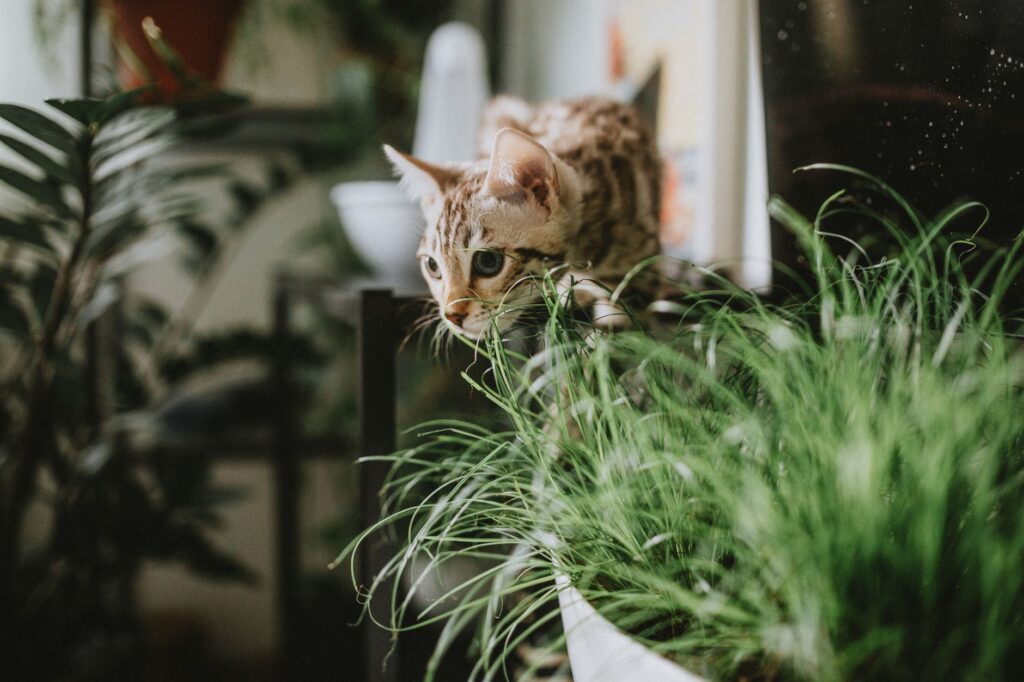
If you share your home with a cat and a houseplant collection, it pays to know which plants belong on a shelf your cat can reach and which ones need to stay out of the house entirely. Cats are curious, they like to chew on leaves, and a plant that’s a minor annoyance for one species can be a genuine emergency for another. The good news is that with a bit of planning, you can keep a jungle of greenery and a cat that never touches the wrong one.
This guide covers the houseplants that are genuinely dangerous to cats, the ones that are considered safe to grow around them, what to do if your cat eats something it shouldn’t, and how to arrange your plants so temptation stays low.
Toxic plants to avoid
- Lilies (true lilies and daylilies): this is the one to take most seriously. True lilies (Lilium species, including Easter, Tiger, Asiatic, and Stargazer lilies) and daylilies (Hemerocallis) are severely toxic to cats and can cause fatal kidney failure. Every part of the plant is dangerous, including the pollen and the water in a vase holding cut lilies. Even a small amount of exposure, like a cat grooming pollen off its fur, can be enough to cause serious harm. There is no safe way to keep true lilies or daylilies in a home with a cat.
- Sago palm: every part of the plant is toxic, but the seeds are the most concentrated. Ingestion can cause vomiting and progress to liver failure, and it is considered one of the more dangerous ornamental plants for cats.
- Pothos: a very common trailing houseplant that contains insoluble calcium oxalate crystals. Chewing on it typically causes oral pain, drooling, and vomiting rather than organ damage, but it’s still unpleasant enough, and common enough in homes, that it’s worth knowing about.
- Philodendron: similar to pothos in the type of irritation it causes. Calcium oxalate crystals in the leaves lead to mouth and throat irritation, drooling, and difficulty swallowing if a cat bites into it.
- Aloe vera: a popular plant for its skin-soothing gel, but the plant itself is mildly toxic to cats if eaten, and can cause vomiting, diarrhea, and lethargy. It’s a good example of a plant that’s useful to humans but not something to leave within chewing distance of a cat.
- Tulip and daffodil bulbs: the flowers and leaves cause milder GI upset, but the bulbs are where the toxins concentrate. Daffodil bulbs in particular can cause more serious symptoms, including drops in blood pressure and heart rate in large ingestions. These are more of a concern for cats with access to a garden or freshly planted bulbs than for houseplants.
- Dieffenbachia (dumb cane): another calcium-oxalate plant. Chewing the leaves causes intense mouth irritation, drooling, and sometimes swelling that can affect breathing in severe cases.
This isn’t a complete list of every toxic plant, and if you’re unsure about a specific species in your home, it’s worth checking the ASPCA’s toxic and non-toxic plant database or asking your vet before you bring it inside.
Cat-safe houseplants
- Spider plant: a resilient, easy-to-grow plant that’s considered non-toxic to cats. Some cats do seem drawn to chewing its long leaves, which is generally harmless, though eating a large quantity of any plant material can still cause mild stomach upset.
- Boston fern: a lush, feathery fern that’s a popular cat-safe choice for hanging baskets. It likes humidity and indirect light, and doesn’t pose a toxicity risk if nibbled.
- Cat grass: not a houseplant in the decorative sense, but worth growing on purpose. It’s usually a mix of wheat, oat, barley, or rye grass, and giving your cat its own patch to chew on can help redirect it away from your other plants entirely.
- Areca palm: a tall, airy palm that’s considered safe for cats and adds real height and greenery to a room without the risk that comes with sago palm.
- Calathea: grown for its striking patterned leaves, calathea is considered non-toxic to cats and tolerates lower light, which makes it a good pick for an apartment.
- Some succulents: plants like haworthia and echeveria are generally considered cat-safe, but “succulent” is not a blanket guarantee of safety. Aloe vera is a succulent and it’s mildly toxic, so always check the specific species rather than assuming.
Even with plants on the safe list, it’s worth remembering that a cat eating a large amount of any plant material, safe or not, can end up with mild vomiting or an upset stomach simply from the volume and fiber involved. Safe doesn’t mean unlimited.
If your cat eats a toxic plant
If you see your cat chewing on a plant you know is toxic, or you notice symptoms like vomiting, drooling, lethargy, loss of appetite, or mouth irritation and you’re not sure what caused them, don’t wait to see if it passes. Contact your veterinarian or an animal poison control line immediately. In the US, the ASPCA Animal Poison Control Center is reachable at (888) 426-4435. If you know which plant was involved, try to bring a leaf, a photo, or the plant tag with you, since it helps the vet identify the right treatment quickly.
With lilies specifically, treatment works best when it starts within a few hours of exposure, so this is not a situation to wait out at home. Remove the plant from the house rather than trying to “monitor” the situation, and don’t attempt to induce vomiting yourself unless a vet or poison control specifically tells you to.
How to cat-proof your plant collection
You don’t have to choose between houseplants and a cat, but a little structure goes a long way.
- Audit what you already own. Walk through your home and check every plant against a toxic plant list before you decide it’s safe to keep at cat height.
- Keep anything toxic out of reach, or out of the house. High shelves and closed rooms work for some cats, but a determined climber can reach almost anywhere, so for anything as dangerous as a lily, the safest rule is simply not to bring it inside.
- Give your cat something better to chew. A dedicated patch of cat grass, placed somewhere visible and easy to reach, gives a curious cat a legitimate outlet instead of your fiddle leaf fig.
- Use texture and scent deterrents. Citrus peels, a shallow layer of decorative rock or pinecones on top of the soil, or a bitter anti-chew spray made for plants can discourage digging and nibbling around plants you want to protect.
- Hang trailing plants instead of shelving them. Hanging planters keep leaves away from paws and mouths better than a low table or windowsill does.
- Watch new arrivals closely. A new plant in the house is a novelty, and novelty is exactly what draws a cat’s attention, so keep an eye on how your cat reacts to anything you’ve just brought home.
FAQ
Are all lilies dangerous to cats, or just some varieties?
True lilies (Lilium species like Easter, Tiger, Asiatic, and Stargazer lilies) and daylilies (Hemerocallis) are the ones linked to severe and potentially fatal kidney failure in cats. Other plants with “lily” in the common name, like peace lily or lily of the valley, are different plants entirely with different risks, so it’s the species that matters, not just the name.
My cat only nibbled one leaf of a toxic plant. Should I still call the vet?
Yes, especially with lilies, where even small exposures like pollen on fur can be dangerous. For less severe plants, a small nibble may only cause mild irritation, but it’s still worth a call to your vet or a poison control line so someone with the full picture can tell you whether to watch for symptoms or come in right away.
Is cat grass the same as catnip?
No. Cat grass is an actual grass, usually wheat, oat, barley, or rye, that cats chew on as roughage. Catnip is a different plant entirely that triggers a scent-based behavioral response in some cats. Both can be part of a cat-friendly home, but they serve different purposes.
Can I keep succulents around my cat?
Some, like haworthia and echeveria, are generally considered safe, but not all succulents are safe just because they’re succulents. Aloe vera is a well-known example of a succulent that’s mildly toxic to cats, so check each species individually rather than assuming the whole category is fine.
What symptoms mean I should get my cat to a vet right away?
Vomiting, drooling, lethargy, loss of appetite, difficulty breathing, or visible mouth irritation after a cat has been near a plant are all reasons to contact a vet or poison control immediately rather than waiting to see if things improve on their own.