
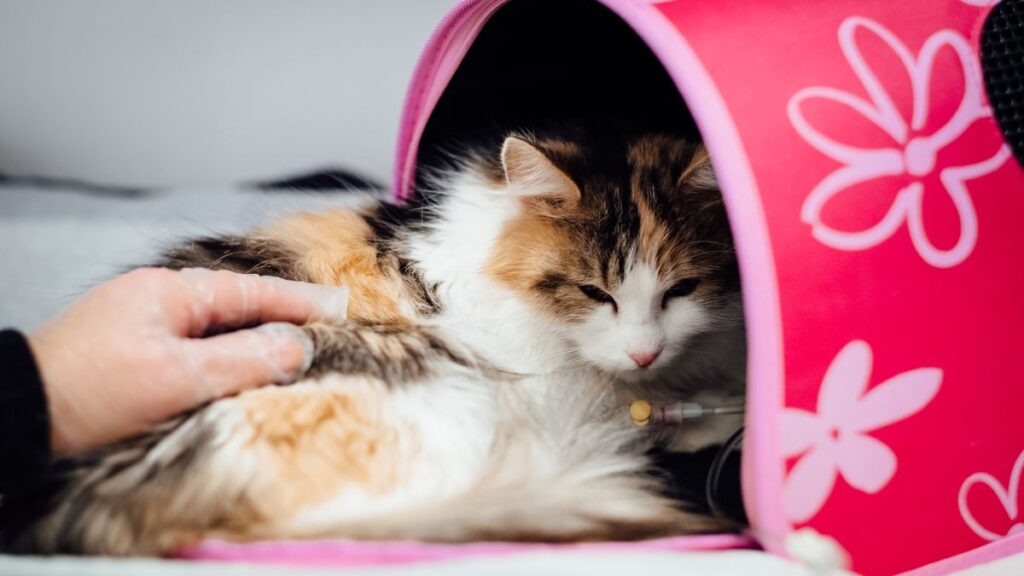
Hard or soft: it is the first fork in the road when buying a cat carrier, and the marketing will not help you, because both sides claim to be best for everything. The honest answer is that they solve different problems. Here is the comparison without the sales pitch, so you can match the carrier to how your cat actually travels.
Quick comparison
| Criteria | Hard carrier | Soft carrier |
|---|---|---|
| Flying in cabin | Rarely fits underseat | Compresses to fit |
| Car trips | Sturdy, strappable | Fine if secured well |
| Escape resistance | Excellent | Mesh can be clawed |
| Cleaning accidents | Wipe and done | Machine wash, dries slow |
| Storage | Bulky | Folds flat |
| Comfort feel | Cave-like, cooler | Padded, warmer |
When the hard carrier wins
Vet trips with a cat that fights, hands down, especially top-loading models where you lower the cat in from above. Multi-cat households, because hard carriers take abuse for a decade and wipe clean after accidents in seconds. Long car trips, because they strap in solidly and hold their shape if something shifts. And any cat with a history of clawing through mesh, because plastic does not lose that argument.
When the soft carrier wins
Flying, and it is not close. Airlines require the carrier to compress under the seat in front, which is exactly what soft carriers do and hard shells do not. Walking and public transit, because a padded shoulder strap beats a rigid handle after ten minutes. Small apartments, because most soft carriers fold flat. And calm cats that mostly nap through travel, who genuinely seem to prefer the padded interior.
The honest tiebreaker
Ask one question: what is the single most common trip this carrier will make? If the answer is the vet, buy hard with a top hatch. If the answer is a plane or the subway, buy soft with a sturdy base. If it is regular car travel, either works secured with the seat belt, or step up to a crash-tested carrier, which is its own category. Owning one of each is not extravagant if you travel often, they cover completely different jobs.
The mistakes people make with each
With hard carriers: buying huge “so he has room”, which turns the cat into loose cargo in corners. Snug is safer. With soft carriers: trusting the zipper with an escape artist, a determined cat learns zippers, so look for locking sliders. With both: storing them away and producing them only on vet day, which is how carriers become monsters.
What durability actually looks like over years, not months
Hard plastic carriers age well in a specific way: the shell rarely fails, but the door hinges and metal grille latches are usually the first parts to loosen or crack after years of use, especially if the carrier gets dropped or the door is slammed shut repeatedly. Check that replacement parts, or at least a compatible door, exist for a model before buying if you expect to own it a decade.
Soft carriers age differently: the fabric shell typically outlasts the zippers, which are the actual weak point. A soft carrier that has traveled for years is far more likely to fail at a worn zipper pull or a track that has picked up grit than at a torn seam. Wiping the zipper track occasionally and avoiding forcing a stuck zipper extends the life of a soft carrier more than almost anything else you can do.
Ventilation matters more than most buyers realize
Hard carriers ventilate through molded side grilles, which give consistent airflow but can let in more roadside noise and cold air in winter than owners expect. Soft carriers ventilate through mesh panels, which trap warmth better but can restrict airflow badly if a carrier only has mesh on one side, a common shortcut in cheaper models. Whichever style you choose, look for ventilation on at least two sides, not just the front, so airflow does not depend entirely on how the carrier happens to be facing.
We name specific models for each situation, including top-loaders and airline picks, in our roundup of the best cat carriers.
Frequently asked questions
Is a hard or soft carrier better for a kitten?
Either works, but buy for the adult size your kitten will reach, not for today. A carrier that fits a grown cat with room to turn around lasts the next decade.
Can a cat break out of a soft carrier?
A panicked, determined cat can eventually claw through mesh or work a cheap zipper. If your cat is an escape artist, choose a hard shell or a soft model with locking zippers, and never leave a soft carrier unattended with the cat inside.
Do hard or soft carriers hold up better with multiple cats using the same one?
Hard carriers generally win here. They wipe clean quickly, do not absorb odor the way fabric can, and the shell does not wear out from repeated use the way mesh and zippers do under regular multi-cat rotation.