If your older cat used to leap onto the kitchen counter without a second thought and now hesitates, takes the long way around, or just stops jumping altogether, you’re not imagining it. Reduced mobility is one of the most common and most under-reported changes in senior cats. It rarely shows up as limping or crying out. It shows up as small, quiet adjustments your cat makes to avoid movements that have started to hurt.
The good news is that most of the ways to help are simple, non-medical, and can be set up in an afternoon: ramps, low-entry litter boxes, better traction on slippery floors, and food and water placed where your cat doesn’t have to climb for it. This guide walks through how to recognize joint pain in cats, how mobility aids and supplements can help, and what changes to make around the house.
Signs of arthritis and joint pain in cats
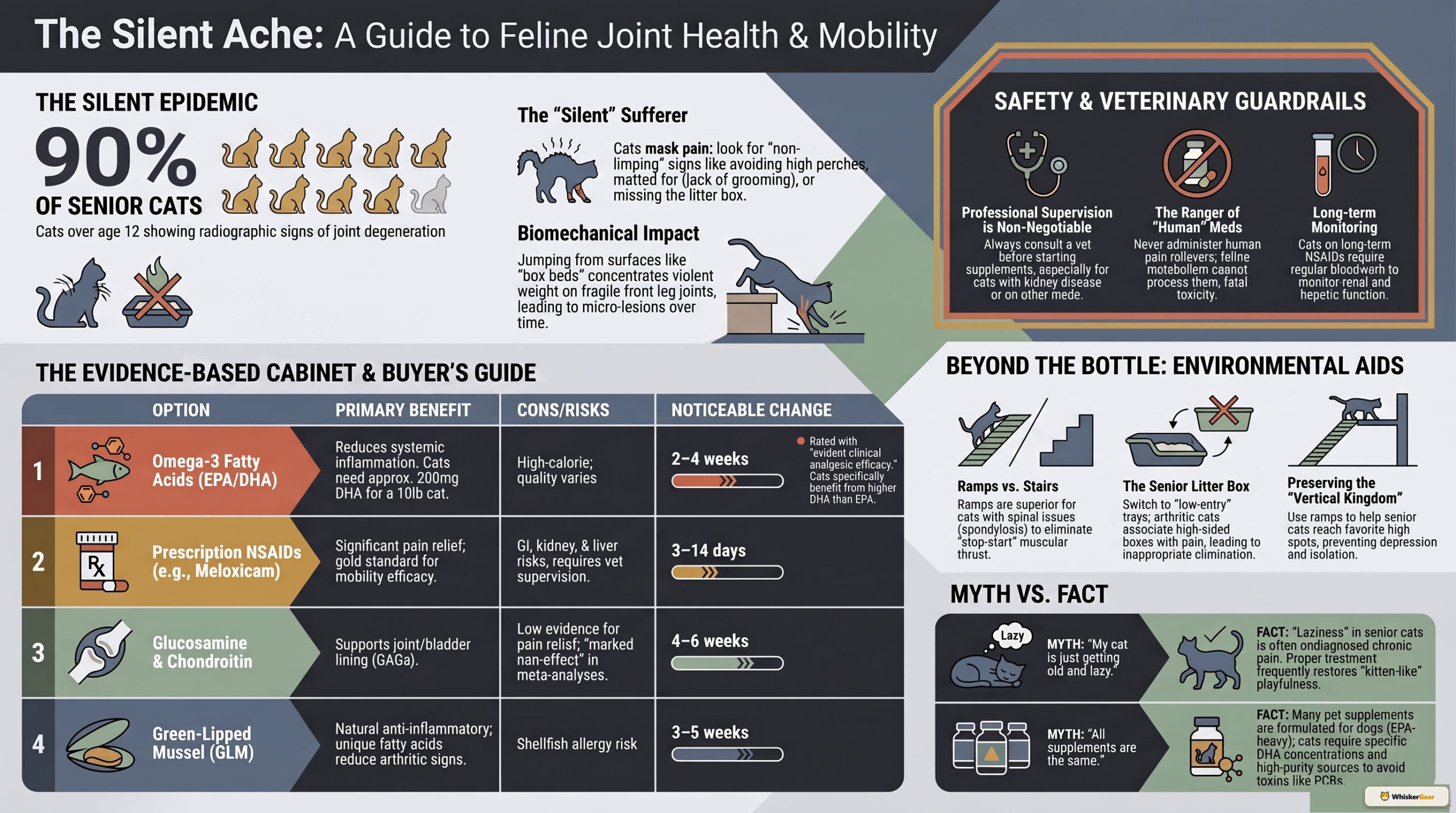
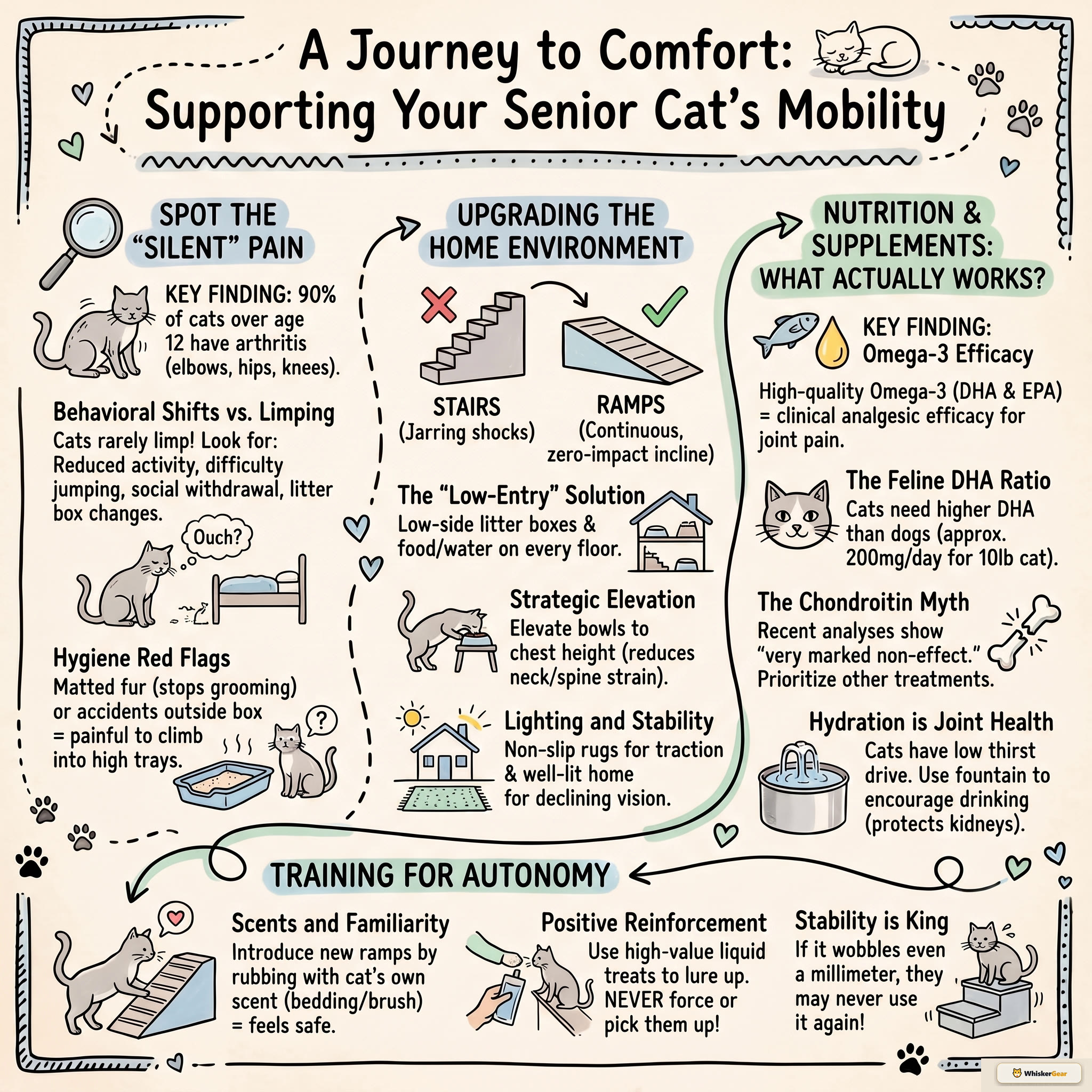
Feline arthritis, more accurately called degenerative joint disease, is extremely common in older cats, and it’s widely underdiagnosed because cats are experts at hiding discomfort. Instead of favoring a leg or limping like a dog might, a cat with sore joints usually just does less. Watch for:
Hesitating before jumping up or down, or jumping to intermediate surfaces instead of one big leap. Reluctance to use stairs. Sleeping in lower, easier-to-reach spots instead of favorite high perches. Stiffness after resting, especially first thing in the morning. Reduced grooming, particularly around the lower back and hindquarters, since twisting to reach that area can be uncomfortable. Skipping the litter box or leaving stool or urine near the edge because stepping over a high side hurts. A less playful, more withdrawn temperament in general.
None of these signs on their own is proof of arthritis, but a pattern of them in a cat over roughly ten years old is worth paying attention to.
Why ramps and pet stairs actually help
The instinct with an aging cat is often to simply block off the high places. That can help prevent a fall, but it also shrinks your cat’s world and removes places they’ve always found comforting, like a window perch or the top of a cat tree. Ramps and stairs are usually the better fix because they let your cat keep access to beds, sofas, and window sills without the single big jump that’s now uncomfortable.
A few practical points when choosing one: look for a wide, stable base so it doesn’t wobble or slide when stepped on, a shallow enough incline that your cat isn’t still working hard to climb it, and a surface with real grip rather than smooth plastic or bare wood. Foam or carpeted steps tend to be gentler on sore joints than hard plastic. If your cat is nervous about new objects, place the ramp near the target surface for a few days with treats on it before expecting them to use it on their own.
What to look for in a joint supplement
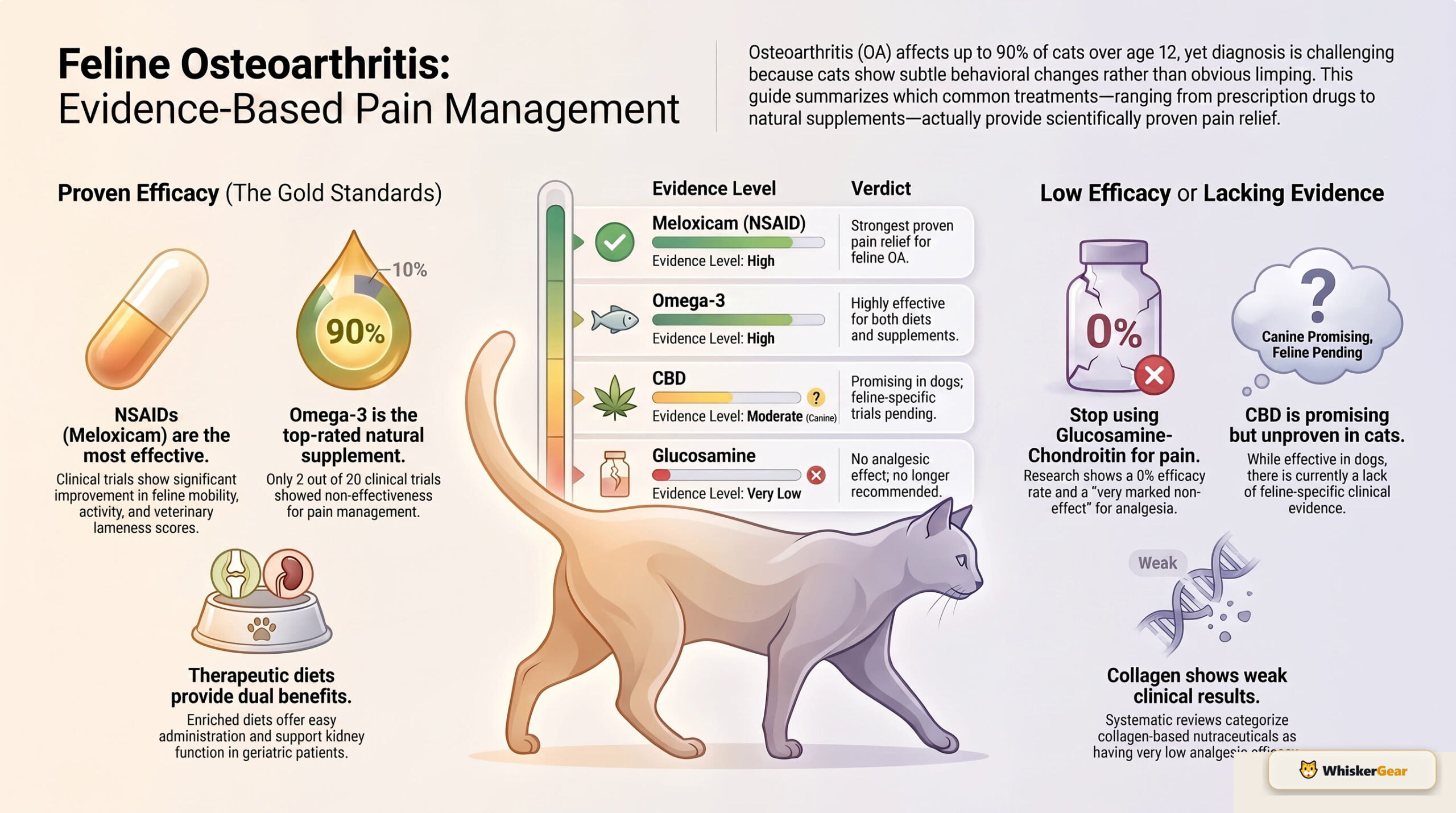
Joint supplements for cats are a comfort and mobility-support tool, not a cure for arthritis, and they work gradually over weeks rather than overnight. The most commonly used ingredients are glucosamine and chondroitin, which support cartilage health, and omega-3 fatty acids (EPA/DHA, usually from fish oil), which have a mild anti-inflammatory effect. Some formulas add green-lipped mussel or MSM as well.
When comparing products, look for one formulated specifically for cats (dosing and flavoring differ from dog products), a clear statement of glucosamine/chondroitin amounts per serving rather than a vague “proprietary blend,” and a format your cat will actually accept, since a chew or powder that gets refused doesn’t help anyone. Introduce any new supplement gradually and keep an eye on appetite and stool in the first week or two.
Home adaptations that make a real difference
Beyond ramps, a handful of small changes around the house go a long way for a cat with stiff joints. A litter box with a lower entry point, or one wall cut down, matters a lot once climbing over a tall side becomes uncomfortable; this is one of the most common reasons older cats start missing the box. Elevating food and water bowls slightly, or using a wide, shallow dish, reduces the strain of hunching down repeatedly to eat and drink. Non-slip mats or rugs on hard floors give sore joints something to grip instead of sliding, which is especially useful near feeding areas, litter boxes, and favorite sleeping spots. Keeping nails trimmed also helps with traction and reduces strain on the joints when a cat overcompensates for long nails.
None of these changes are expensive or complicated, and most cats adjust to them within days.
If your cat suddenly stops jumping altogether, seems noticeably stiff, cries out when touched or picked up, or the change in mobility happens quickly rather than gradually, talk to your vet before starting any supplement or home routine. Sudden mobility loss can also signal an injury, a neurological issue, or pain unrelated to arthritis, and a vet visit is the only way to get an accurate diagnosis and a plan that’s right for your specific cat.
FAQ
At what age do cats typically start losing mobility?
It varies a lot by cat, but joint changes often become noticeable from around ten to twelve years old, and are common in cats over fifteen. Larger or overweight cats may show signs earlier.
Can I give my cat human glucosamine supplements?
It’s best to use a product formulated and dosed for cats rather than a human supplement, since strengths and inactive ingredients differ. Ask your vet for a specific recommendation if you’re unsure.
Will a ramp make my cat lazy or worsen muscle loss?
No. A ramp removes a painful movement, not activity in general. Cats with joint pain that keeps avoiding jumping already move less; making the movements they do make more comfortable tends to keep them more active overall, not less.
How long does it take to see results from a joint supplement?
Most joint supplements need several weeks of consistent use before any change in comfort or mobility is noticeable. They’re a gradual support measure, not a fast-acting treatment.
My cat is only seven years old but has stopped jumping. Should I still be concerned?
Yes, a sudden change at any age is worth a vet visit. Arthritis is less common in younger cats, so an abrupt drop in mobility at seven is more likely to point to an injury or another issue that needs a proper diagnosis.
Infographic: Feline Joint Health & Mobility